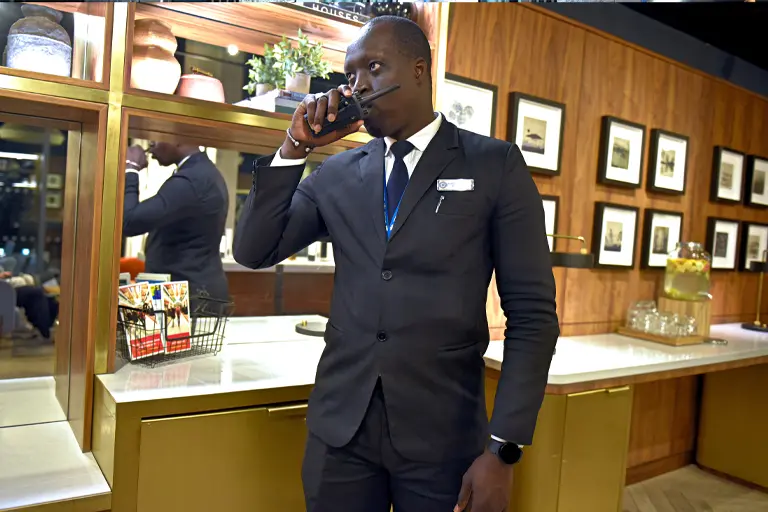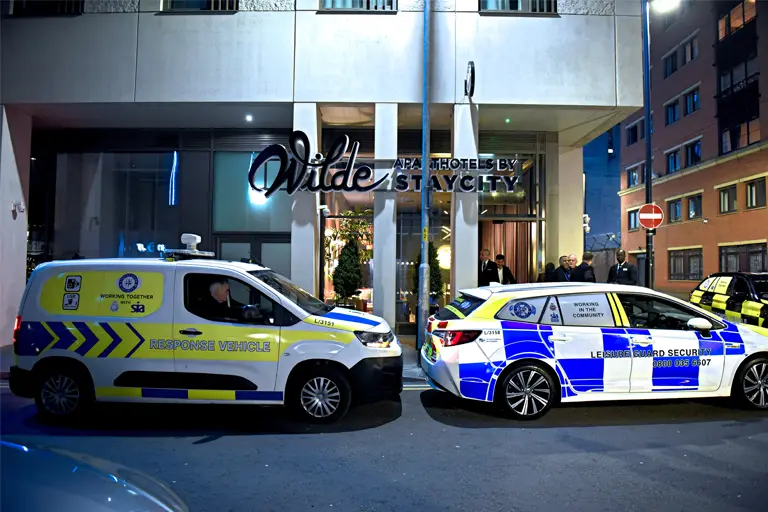
Why Hotels Are Rethinking Traditional Security
Hotel security has changed, not because crime suddenly increased, but because guest expectations have evolved.
Today’s hotel guests expect to feel safe without being reminded that security is present. They want reassurance, not intimidation. Calm, not confrontation. Confidence, not control. Yet many hotels still rely on traditional security models that were designed for retail centres, construction sites, or industrial environments, not hospitality.
This creates a quiet but serious disconnect.
A uniformed guard standing rigidly in a lobby might technically provide “security”, but to a guest, that presence can raise questions rather than answers. Why is security needed here? Is something wrong? Am I safe? Instead of reassurance, visible enforcement can subtly increase anxiety, especially in luxury, boutique, or guest-experience-led hotels.
At the same time, front desk staff are increasingly being asked to handle situations they were never trained for:
late-night disturbances, unauthorised access, intoxicated guests, aggressive behaviour, medical incidents, and emergency situations, all while maintaining a warm, welcoming tone. This places enormous pressure on hospitality teams and exposes hotels to unnecessary risk.
As a result, more hotels are beginning to rethink what “security” should look like in a modern hospitality environment.
Rather than asking “Do we need guards?”
The better question has become:
“How do we protect guests, staff, and reputation without disrupting the experience we work so hard to create?”
This is where concierge security enters the conversation.
Concierge security is not about adding more authority to a space, it’s about embedding reassurance into the guest journey. It blends situational awareness, behavioural insight, and hospitality-level communication into a role that feels natural within a hotel environment. When done correctly, guests don’t feel watched, they feel supported.
Hotels adopting this approach aren’t reacting to incidents; they’re preventing them. They’re recognising that most security failures don’t begin with crime, they begin with discomfort, uncertainty, or small moments that escalate because no one intervened early enough, or in the right way.
This article explores whether concierge security is the right fit for your hotel, not as a trend, but as a strategic decision. We’ll look at how it works, where it adds the most value, when it may not be suitable, and how it can quietly protect the two things that matter most in hospitality: people and reputation.
What Is Concierge Security? (And What It Isn’t)
Concierge security is a guest-facing security model designed specifically for hospitality environments where experience, discretion, and reassurance matter as much as protection.
At its core, concierge security blends professional security awareness with hospitality-level service delivery. Officers are trained not just to observe and respond, but to engage, calmly, confidently, and appropriately, in a way that feels natural within a hotel setting. Their presence is intentional but understated, designed to reassure without overwhelming the environment.
Unlike traditional security roles that focus on enforcement, access control, or static guarding, concierge security focuses on early intervention and behavioural prevention. The goal is not to react to incidents after they escalate, but to recognise the subtle warning signs that something may go wrong and address them before guests are affected.
This distinction is crucial.
What Hotel Concierge Security Is
Concierge security officers operate as part of the front-of-house experience. They are visible enough to provide reassurance, yet discreet enough to maintain the tone of the hotel. Their responsibilities often include:
- Monitoring guest flow and access points without appearing restrictive
- Identifying unusual or out-of-place behaviour
- Engaging with guests proactively to offer assistance and guidance
- Supporting reception teams during busy or high-risk periods
- De-escalating situations quietly and professionally
- Acting as a calm authority during emergencies or evacuations
They are trained to read environments, not just respond to alarms.
Language, posture, appearance, and timing all matter. A concierge security officer understands that how something is said is often more important than what is said. A polite redirection, a helpful suggestion, or a quiet conversation can prevent an incident that would otherwise escalate into confrontation or complaint.
What Concierge Security Isn’t
To fully understand concierge security, it’s just as important to clarify what it is not.
Concierge security is not:
- A uniformed enforcement presence designed to intimidate
- A replacement for customer service staff
- A reactive, “stand and observe” guarding role
- A one-size-fits-all solution for every property
Unlike traditional guards, concierge security officers are not there to simply “hold the line” or wait for something to happen. Nor are they expected to take over the responsibilities of hotel staff. Their role is to support, stabilise, and protect, not dominate the space.
Crucially, concierge security does not introduce a sense of surveillance. Guests should never feel watched. Instead, the presence should feel reassuring, professional, and consistent with the hotel’s brand values. In many cases, guests assume concierge security officers are senior hospitality staff, and that is often a good sign.
Why the Difference Matters in Hotels
Hotels are emotionally charged environments. Guests may be tired, stressed, intoxicated, celebrating, grieving, or unfamiliar with their surroundings. Traditional security models often fail in these spaces because they treat situations as rule violations rather than human interactions.
Concierge security recognises that most hotel incidents begin as behavioural issues, not security threats.
By addressing discomfort early, whether it’s loitering, raised voices, unauthorised access, or confusion, concierge security prevents escalation while preserving dignity for everyone involved. This protects guests, staff, and the hotel’s reputation without creating scenes that damage the guest experience.
As we’ll explore in the next section, these differences become even clearer when concierge security is compared directly with traditional hotel security models.
Concierge Security vs Traditional Hotel Security
At a glance, concierge security and traditional hotel security may appear similar. Both involve trained professionals, both focus on safety, and both operate within the same physical space. However, the approach, impact, and outcomes are fundamentally different.
Traditional hotel security models were largely inherited from other industries, retail, commercial premises, construction sites, where visibility and authority are prioritised over experience. In hospitality, that model often feels out of place.
Concierge security, by contrast, is designed specifically for guest-facing environments, where tone, timing, and perception matter as much as physical security.
The difference isn’t just cosmetic, it affects guest behaviour, staff confidence, incident frequency, and brand reputation.
Key Differences in Approach
Traditional hotel security tends to be reactive. Officers are often positioned to observe and respond once an incident occurs. This can work in environments where confrontation is expected, but in hotels it often leads to situations escalating publicly, something guests notice immediately.
Concierge security is preventative. Officers focus on recognising early warning signs, engaging before issues develop, and resolving situations quietly. The emphasis is on avoiding disruption, not managing it after the fact.
This difference becomes particularly important during busy periods, late-night operations, events, or when alcohol is involved, all common factors in hotel incidents.
Concierge Security vs Traditional Hotel Security
| Area of Comparison | Concierge Security | Traditional Hotel Security |
|---|---|---|
| Primary Focus | Guest reassurance and prevention | Enforcement and response |
| Visibility | Discreet, blended into the environment | Highly visible, uniform-led |
| Guest Interaction | Proactive, conversational, supportive | Minimal, often reactive |
| Training Emphasis | Hospitality, de-escalation, behaviour awareness | Observation, access control, response |
| Incident Handling | Quiet intervention before escalation | Action taken after escalation |
| Impact on Guest Experience | Enhances comfort and confidence | Can increase anxiety or concern |
| Staff Support | Acts as a support layer for front desk and management | Often operates independently |
| Brand Alignment | Tailored to match hotel tone and image | Generic, one-size-fits-all |
| Late-Night Effectiveness | Strong reassurance during reduced staffing | Limited engagement unless incident occurs |
| Reputation Protection | Prevents visible incidents | Manages incidents after they are seen |
| Reporting & Professional Tone | Guest-aware reporting, discreet professionalism | Security-led reporting, may feel operational only |
Why This Comparison Matters
From a guest’s perspective, the difference is subtle but powerful. A calm, approachable presence signals professionalism and care. A rigid or overly authoritative presence can signal risk, even when none exists.
From a management perspective, concierge security reduces pressure on reception teams, improves incident outcomes, and lowers the likelihood of complaints or negative reviews linked to safety concerns.
Most importantly, concierge security aligns with how hotels actually operate:
through people, interaction, and experience, not enforcement.
In the next section, we’ll explore why this alignment is becoming increasingly important as guest expectations continue to evolve, and why perception now plays a critical role in hotel security decisions.
Why Guest Perception Matters More Than Ever
In hotels, security is rarely judged by what happens, it’s judged by how guests feel.
Most guests will never experience a serious incident during their stay, but they are constantly forming opinions about safety through subtle cues: who they see, how staff behave, how situations are handled, and whether the environment feels calm or tense. These perceptions form long before anything goes wrong.
In today’s hospitality landscape, perceived safety is part of the guest experience, just like cleanliness, service quality, and atmosphere.
Safety Is Emotional, Not Logical
Guests don’t assess security using policies or risk assessments. They assess it emotionally.
A raised voice in the lobby, a confrontation at reception, or a visibly stressed staff member can instantly undermine a guest’s sense of comfort, even if the situation is resolved moments later. Once that feeling of unease sets in, it lingers.
Concierge security works precisely because it addresses this emotional layer. By intervening early, calmly, and discreetly, potential issues are handled before they become visible to other guests. This prevents the ripple effect where one incident affects dozens of people who were never directly involved.
The Impact on Reviews and Reputation
Online reviews rarely say “the hotel had poor security procedures”. Instead, they say things like:
- “Didn’t feel safe late at night”
- “Staff seemed overwhelmed”
- “There was an incident in the lobby and it felt chaotic”
These comments are damaging because they speak to trust, not just service. A guest who feels unsafe is far less likely to return, recommend the hotel, or overlook minor issues elsewhere in their stay.
Concierge security protects against this kind of reputational erosion by ensuring that incidents are either prevented entirely or managed in a way that most guests never notice.
Reassurance Without Disruption
One of the key advantages of concierge security is its ability to provide reassurance without changing the tone of the hotel.
Guests feel safer when:
- There is a calm, confident presence nearby
- Staff appear supported and in control
- Situations are handled quietly and professionally
What they don’t want is to feel like they’re staying somewhere that needs heavy security.
Concierge security strikes that balance. It reassures without alarming, supports without overshadowing, and protects without intruding. In many cases, guests simply perceive the environment as “well run”, without consciously identifying security as the reason.
Staff Confidence Transfers to Guests
Guest perception is also heavily influenced by how staff behave under pressure. When front desk teams know there is a trained security professional nearby, they act more confidently. That confidence transfers directly to guests.
A calm receptionist handling a late-night issue sends a very different message to a guest than one who appears flustered or unsure. Concierge security acts as a stabilising force, allowing hospitality staff to focus on service rather than personal safety or conflict management.
In an era where guest experience defines brand value, security can no longer operate in isolation. It must work with the guest journey, not alongside it.
In the next section, we’ll look at which types of hotels benefit most from concierge security, and where this approach delivers the greatest return.
The Types of Hotels Concierge Security Works Best For
Concierge security is not a one-size-fits-all solution, but when applied to the right environment, it delivers significant value. Hotels that rely on guest experience, brand perception, and calm atmosphere tend to benefit the most from a concierge-style approach to security.
The key factor isn’t size, it’s guest interaction.
Hotels with regular public access, late-night activity, or mixed-use spaces face a higher volume of behavioural risk. In these environments, traditional security can feel either excessive or ineffective. Concierge security fills the gap by providing presence, awareness, and reassurance without disrupting the flow of the hotel.
Luxury and Five-Star Hotels
Luxury hotels place enormous emphasis on atmosphere. Guests expect refinement, discretion, and seamless service. Visible enforcement or heavy-handed security can feel out of place and may even undermine the brand.
Concierge security works particularly well here because:
- Officers blend into the environment
- Guest interactions feel natural and respectful
- Incidents are handled quietly and privately
- Staff are supported without creating tension
In many luxury settings, concierge security officers are perceived as senior hospitality staff rather than security, which is often exactly the desired outcome.
Boutique and Lifestyle Hotels
Boutique hotels attract guests seeking experience and individuality, but these properties often have:
- Smaller teams
- Open layouts
- Bar or social spaces
- Higher guest interaction
Concierge security supports these environments by acting as an additional layer of calm control, particularly during evenings and weekends, without changing the informal tone guests value.
City-Centre and Destination Hotels
Hotels in busy city locations face unique challenges:
- High footfall
- Non-resident visitors
- Increased opportunistic behaviour
- Late-night activity
Concierge security helps manage access, identify non-guests, and deter unwanted behaviour without creating confrontation at the front door.
Hotels with Bars, Restaurants, and Events
Alcohol significantly increases risk. Most hotel incidents occur where guests mix social activity with late hours.
Concierge security is especially effective in these environments because officers are trained in:
- De-escalation
- Behaviour recognition
- Crowd flow management
- Quiet intervention before issues escalate
Serviced Apartments and Mixed-Use Developments
Hotels connected to residential, retail, or office spaces benefit from concierge security because the role naturally adapts to:
- Multiple user types
- Shared access points
- Varying expectations of security and service
Hotel Type vs Concierge Security Suitability
| Hotel Type | Common Security Challenges | Why Concierge Security Works |
|---|---|---|
| Luxury / Five-Star Hotels | High guest expectations, reputational sensitivity, need for discretion | Discreet presence protects brand image while providing reassurance without intimidation |
| Boutique & Lifestyle Hotels | Smaller teams, social spaces, higher guest interaction | Early intervention prevents escalation while maintaining relaxed, informal atmosphere |
| City-Centre Hotels | High footfall, unauthorised access, late-night activity | Manages access quietly and deters unwanted behaviour without visible enforcement |
| Hotels with Bars & Events | Alcohol-related behaviour, crowd movement, late-night disturbances | Behaviour awareness and de-escalation reduce incidents before they affect guests |
| Serviced Apartments | Mixed resident and guest access, shared spaces | Blended security approach suits shared-use environments without disruption |
| Conference & Event Hotels | High volumes of unfamiliar guests, peak-time congestion | Calm crowd management and visible reassurance improve flow and safety |
When Fit Matters More Than Coverage
The most successful concierge security deployments happen when hotels recognise that security is part of the guest journey, not just a safety function.
If your hotel:
- Relies on atmosphere and brand perception
- Hosts guests unfamiliar with the building
- Experiences late-night or social activity
- Wants to support staff without alarming guests
Then concierge security is often a natural fit.
In the next section, we’ll explore what concierge security officers are actually trained to do, and why that training makes such a difference in real hotel environments.
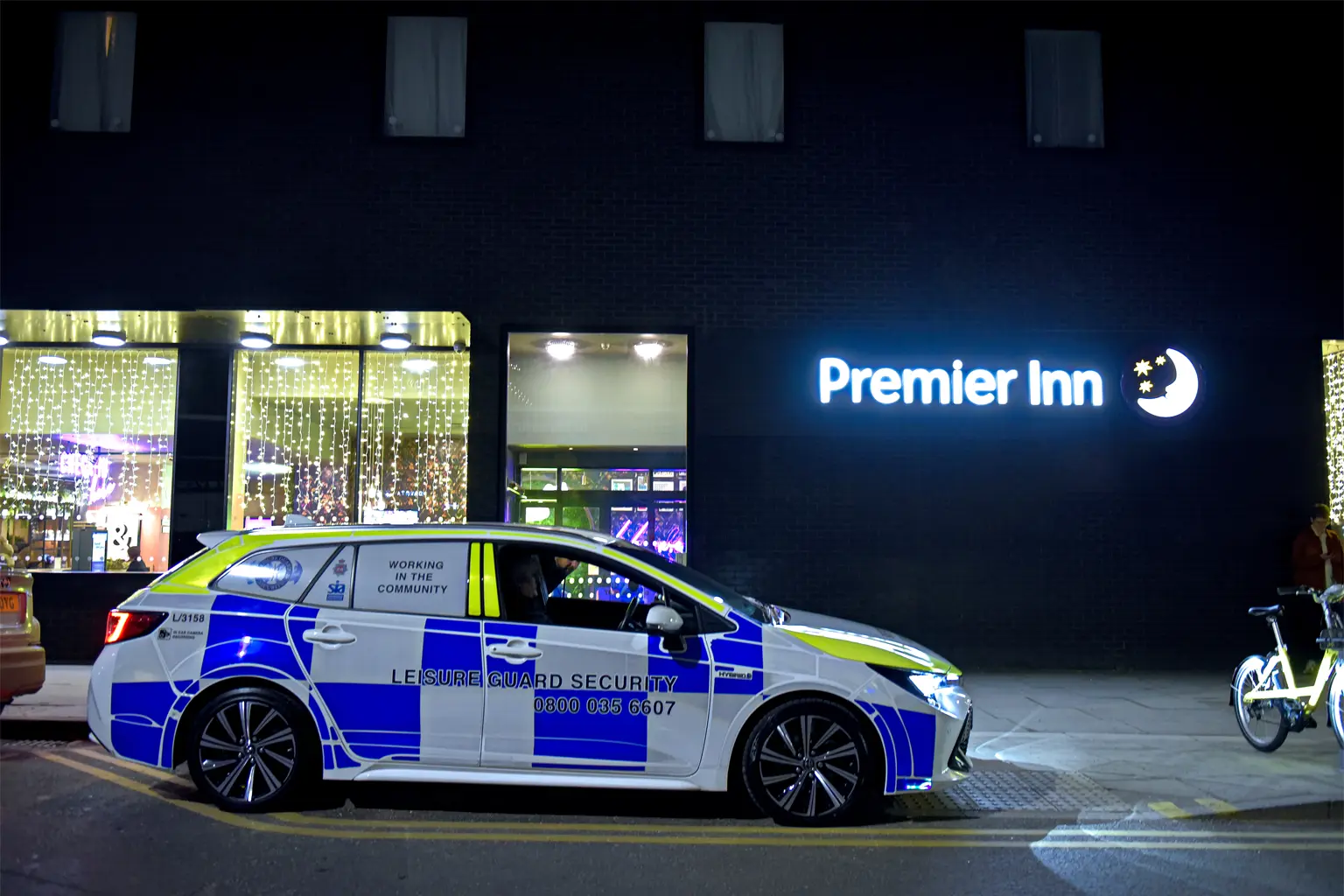
What Concierge Security Officers Are Actually Trained To Do
The effectiveness of concierge security doesn’t come from visibility or authority, it comes from training that is designed specifically for human interaction in hospitality environments.
Concierge security officers are trained to operate in spaces where emotions run high, expectations are personal, and reputations can be damaged in seconds. Their role is not to wait for incidents to happen, but to recognise risk early and intervene in a way that feels calm, respectful, and appropriate.
This training focuses on behaviour, communication, and situational awareness, rather than enforcement.
Situational Awareness in a Hospitality Setting
Concierge security officers are trained to constantly read their environment. This includes:
- Noticing changes in guest behaviour
- Identifying individuals who appear out of place
- Recognising escalating body language
- Monitoring access points without restricting flow
Unlike static guards, concierge security officers understand that most hotel incidents give off warning signs long before they occur. A raised voice, repeated pacing, visible frustration, or inappropriate access attempts often precede larger problems.
By identifying these signs early, concierge security can intervene before the situation becomes noticeable to other guests.
De-escalation Through Communication
A cornerstone of concierge security training is verbal de-escalation.
Officers are taught how to:
- Speak calmly under pressure
- Use neutral, non-confrontational language
- Maintain open body posture
- Control tone, volume, and pace of conversation
- Redirect behaviour without issuing commands
This approach reduces defensiveness and prevents situations from becoming confrontational. In many cases, a quiet conversation in the right moment prevents an issue that could otherwise escalate into a scene.
Guest-Focused Interaction
Concierge security officers are trained to engage with guests in a way that feels helpful rather than authoritative. This often includes:
- Offering assistance rather than instruction
- Positioning themselves as support rather than control
- Acting as a point of reassurance during uncertainty
This skill is particularly important in environments where guests may be tired, confused, intoxicated, or unfamiliar with their surroundings.
Supporting Hotel Staff
Concierge security officers are also trained to support hotel teams, not replace them. This includes:
- Acting as a visible reassurance for front desk staff
- Providing backup during difficult conversations
- Managing disruptive individuals so staff don’t have to
- Offering calm leadership during incidents or evacuations
When staff feel supported, they perform better, and that confidence transfers directly to guests.
What Concierge Security Officers Avoid
Just as important as what concierge security officers do is what they are trained not to do.
They avoid:
- Public confrontation
- Over-policing minor issues
- Escalating situations unnecessarily
- Creating visible authority displays that alarm guests
The aim is always to resolve issues quietly, professionally, and with minimal impact on the guest experience.
Concierge security training recognises a simple truth:
In hotels, behaviour management matters more than enforcement.
In the next section, we’ll explore the common risks concierge security helps prevent, and how early intervention significantly reduces incidents before they ever reach reception or management.
Common Risks Concierge Security Helps Prevent
Most hotel security incidents don’t begin as serious threats. They start as small behavioural issues that escalate because no one intervenes early, or because the intervention feels confrontational, public, or poorly handled.
Concierge security is effective precisely because it targets these early-stage risks. By being present, aware, and approachable, concierge security officers reduce the likelihood of incidents ever reaching a point where guests feel uncomfortable or unsafe.
Below are the most common risks concierge security helps prevent in hotel environments.
Unauthorised Access
Hotels are semi-public spaces by nature. Non-residents often enter lobbies unnoticed, especially during busy periods or late at night. Without discreet monitoring, this can lead to:
- Tailgating into guest floors
- Non-guests using hotel facilities
- Increased theft risk
- Guest safety concerns
Concierge security quietly manages access by observing behaviour, engaging politely, and redirecting individuals who don’t belong, without creating a scene at the front door.
Anti-Social Behaviour
Raised voices, intoxication, arguments, and disruptive behaviour often occur late at night or around bar areas. Left unmanaged, these situations quickly become visible to other guests and damage the hotel’s atmosphere.
Concierge security officers intervene early, using calm conversation and presence to de-escalate situations before they escalate into complaints or confrontations.
Opportunistic Theft
Hotels present opportunities for theft due to:
- Unattended luggage
- Open lobby layouts
- Busy reception areas
- Event traffic
A visible but discreet concierge security presence acts as a strong deterrent. Individuals looking for opportunity often abandon attempts once they realise the environment is being actively observed.
Guest Disputes
Arguments between guests, particularly where alcohol or stress is involved, can escalate quickly if left unchecked. Concierge security officers are trained to separate parties calmly, manage emotions, and resolve disputes privately.
This prevents scenes that can unsettle surrounding guests and lead to formal complaints or negative reviews.
Staff Safety Risks
Hotel staff, particularly night teams, are often exposed to verbal abuse, aggressive behaviour, or intimidating situations. Concierge security reduces these risks by acting as a buffer, ensuring staff are not left to manage unsafe situations alone.
| Common Hotel Risk | Typical Outcome Without Concierge Security | Concierge Security Response |
|---|---|---|
| Unauthorised Access | Tailgating, guest-floor breaches, increased safety concerns | Polite engagement, verification, and calm redirection before access is gained |
| Anti-Social Behaviour | Escalation, guest complaints, visible disruption | Early de-escalation through calm conversation and discreet intervention |
| Opportunistic Theft | Missing property, guest distrust, investigation after the fact | Visible but discreet presence acting as a strong behavioural deterrent |
| Guest Disputes | Public arguments, tension spreading to other guests | Quiet separation and mediation away from public view |
| Late-Night Disturbances | Noise complaints, staff feeling unsupported | Reassuring presence and proactive behaviour management during reduced staffing |
| Staff Safety Concerns | Stress, hesitation, inconsistent responses | Professional support and reassurance allowing staff to focus on service |
| Emergency Situations | Confusion, panic, delayed response | Calm leadership, guest direction, and coordination with emergency services |
Prevention Is Always Less Visible Than Response
One of the challenges of concierge security is that success is often invisible. When incidents don’t happen, it can be easy to underestimate the value being delivered.
However, fewer complaints, calmer environments, and more confident staff are strong indicators that risks are being managed before they become problems.
In the next section, we’ll focus specifically on late nights, alcohol, and peak risk periods, and why concierge security becomes even more valuable when staffing levels are lower and emotions are higher.
Take a Calm, Confident Approach to Hotel Security
Discover whether concierge security is the right fit for your hotel, without pressure or obligation.
Every hotel faces different risks, guest expectations, and operational challenges. Concierge security works best when it’s tailored to the environment, the team, and the brand it supports. If you’re exploring ways to protect your guests, support your staff, and reduce visible incidents without changing the atmosphere of your hotel, a professional conversation can help you understand what’s possible and what makes sense for your property.
Late Nights, Alcohol, and Peak Risk Periods
Most hotel security incidents do not occur during the calm of the afternoon or early evening. They happen when staffing is reduced, emotions are heightened, and judgement is impaired, typically late at night and during peak social periods.
Understanding when risk increases is just as important as understanding what the risk is.
Why Late Nights Are the Highest-Risk Period
Late-night operations introduce a unique combination of challenges:
- Fewer staff on duty
- Reduced management presence
- Guests returning tired or intoxicated
- Lower tolerance for disruption
- Slower access to support services
During these hours, even minor issues can escalate quickly if they are not managed immediately and appropriately.
Front desk staff are often left to handle situations that require confidence, authority, and conflict management skills, all while maintaining a welcoming tone. Without support, hesitation or uncertainty can unintentionally worsen situations.
Concierge security fills this gap by providing a calm, capable presence that stabilises the environment during these vulnerable periods.
The Role of Alcohol in Hotel Incidents
Alcohol is a major contributing factor in hotel security incidents, particularly in properties with:
- Bars and lounges
- Event spaces
- Weddings and conferences
- Late-night food and beverage service
Alcohol affects judgement, emotional regulation, and personal boundaries. This increases the likelihood of:
- Arguments between guests
- Disruptive behaviour
- Verbal abuse toward staff
- Poor decision-making
Concierge security officers are trained to recognise early behavioural shifts linked to intoxication and intervene before behaviour crosses a line.
Peak Periods That Increase Risk
Beyond late nights, hotels often experience heightened risk during:
- Weekends
- Holiday periods
- Christmas and New Year
- Large events or conferences
- High-occupancy periods
These times bring unfamiliar guests into close proximity, often with limited knowledge of the building or expectations around behaviour.
Concierge security provides additional control during these periods without changing the tone of the hotel or making guests feel policed.
Managing Risk Without Changing Atmosphere
One of the key advantages of concierge security during peak risk periods is its ability to maintain atmosphere.
Rather than reacting visibly to incidents, concierge security works quietly in the background:
- Redirecting guests
- Defusing tensions
- Supporting staff
- Monitoring behaviour patterns
Guests experience a calm, well-managed environment, even when risk is high.
When Hotels Feel the Difference Most
Hotels often notice the greatest impact of concierge security:
- Between midnight and early morning
- During weekends and event nights
- When night staff report feeling more confident
- When complaints linked to noise or behaviour decrease
These improvements are often subtle but meaningful. They indicate that risks are being managed before they become visible problems.
In the next section, we’ll explore how concierge security supports hotel staff directly, and why this support plays a critical role in safety, morale, and service quality.
How Concierge Security Supports Hotel Staff
While guest safety is often the primary driver for improving hotel security, one of the most immediate and measurable benefits of concierge security is the support it provides to hotel staff.
Front desk teams, night auditors, and duty managers are frequently placed in challenging situations that fall outside traditional hospitality training. They are expected to remain polite, calm, and professional while managing difficult conversations, aggressive behaviour, or safety concerns, often without backup.
Concierge security reduces this pressure significantly.
Reducing Staff Exposure to Risk
Hotel staff are not security professionals. Yet many are routinely exposed to:
- Verbally aggressive guests
- Intoxicated behaviour
- Threatening language
- Late-night confrontations
Concierge security acts as a protective buffer, ensuring staff are not left to manage unsafe situations alone. This reduces stress and lowers the risk of staff making mistakes under pressure.
Improving Staff Confidence and Decision-Making
Knowing that a trained security professional is nearby changes how staff respond to situations. With concierge security in place:
- Staff are more confident enforcing policies
- Difficult conversations are handled earlier
- Staff are less likely to tolerate inappropriate behaviour
This confidence leads to quicker, calmer resolutions and prevents situations from escalating unnecessarily.
Supporting Front Desk and Management Teams
Concierge security works alongside reception and management teams rather than independently. Officers are trained to:
- Step in when conversations become heated
- Take over de-escalation where appropriate
- Provide reassurance during incidents
- Communicate clearly with management
This allows hotel staff to remain focused on service delivery while knowing support is immediately available if needed.
Reducing Burnout and Turnover
Repeated exposure to stressful situations contributes to burnout, absenteeism, and staff turnover, particularly in night roles.
By reducing the frequency and intensity of confrontational incidents, concierge security improves:
- Staff wellbeing
- Job satisfaction
- Retention rates
Hotels often report that teams feel more valued and supported once concierge security is introduced.
Staff Challenge vs Concierge Security Benefit
| Staff Challenge | Impact on Staff Without Concierge Security | Concierge Security Benefit |
|---|---|---|
| Managing Aggressive or Intoxicated Guests | Increased stress, hesitation, risk of escalation | Calm professional intervention allowing staff to step back safely |
| Enforcing Hotel Policies | Staff discomfort, inconsistent enforcement, guest pushback | Authority delivered diplomatically, reducing conflict and pressure |
| Working Late or Alone | Anxiety, reduced confidence, slower response to issues | Reassuring presence improving confidence and decision-making |
| Handling Guest Disputes | Emotional involvement, risk of public scenes | Neutral third-party mediation handled discreetly |
| Responding to Emergencies | Confusion, delayed coordination, increased pressure | Calm leadership and coordination with emergency services |
| Maintaining Service Standards During Incidents | Service quality drops while incidents are managed | Staff remain guest-focused while security manages risk |
| Confidence in Decision-Making | Hesitation, over-escalation, or avoidance | Clear support enabling faster, calmer decisions |
Supporting People Protects Performance
Hotels that invest in concierge security often find that improvements in guest experience are preceded by improvements in staff confidence.
When staff feel safe and supported, they perform better. When they perform better, guests feel reassured. And when guests feel reassured, reputations are protected.
In the next section, we’ll examine how concierge security officers are trained to blend with your brand, including uniform, appearance, and presentation, a crucial factor in hospitality environments.
Uniform, Appearance, and Brand Alignment
In hospitality, appearance is never superficial. It communicates standards, expectations, and values before a single word is spoken. This is especially true when it comes to security.
Guests may not consciously analyse uniforms or posture, but they instinctively respond to them. A security presence that feels out of place can quietly undermine the atmosphere a hotel has worked hard to create. Concierge security recognises this and treats appearance as a strategic tool rather than a default issue.
Why Appearance Matters in Hotels
Hotels are emotional spaces. Guests arrive with expectations shaped by branding, marketing, and previous experiences. Everything they see, from reception desks to staff uniforms, reinforces or contradicts those expectations.
Security is no exception.
A visibly rigid or enforcement-led security presence can unintentionally signal:
- Elevated risk
- Past incidents
- A lack of control
- An environment that requires policing
Concierge security takes a different approach. Officers are presented in a way that feels intentional, refined, and appropriate to the setting.
Aligning Security With Your Brand
One of the defining features of concierge security is its adaptability. Uniforms, presentation, and conduct can be tailored to match the tone of the hotel, whether that tone is:
- Luxury and formal
- Modern and minimalist
- Boutique and relaxed
- Corporate and professional
This alignment ensures that security enhances the environment rather than competing with it.
In many hotels, concierge security officers are designed to resemble senior front-of-house staff rather than traditional guards. This allows them to engage naturally with guests without creating unnecessary distance or discomfort.
Body Language and Presence
Appearance goes beyond clothing. Concierge security training places strong emphasis on:
- Open, approachable posture
- Calm facial expressions
- Controlled movements
- Appropriate eye contact
These elements influence how guests perceive safety. A relaxed but confident presence communicates control without tension, reassurance without authority.
Discretion Without Disappearing
Concierge security must strike a careful balance: visible enough to reassure, subtle enough not to alarm.
Officers are typically positioned where they can:
- Observe key access points
- Support reception teams
- Engage naturally with guests
- Respond quickly to emerging issues
Their presence feels deliberate, not intrusive.
Avoiding the “Over-Secured” Look
Hotels that over-emphasise visible security risk creating a psychological barrier between guests and the space. Concierge security avoids this by focusing on:
- Integration rather than separation
- Engagement rather than enforcement
- Prevention rather than reaction
Guests should feel protected, not monitored.
When concierge security is aligned with a hotel’s brand, it becomes almost invisible in the best possible way. Guests sense professionalism and calm without being reminded that security is operating around them.
In the next section, we’ll explore what concierge security officers notice that others don’t, and how behavioural awareness allows them to prevent incidents long before they become problems.
Security That Protects Experience, Not Just Property
Support your staff, reassure your guests, and protect your brand, quietly and professionally.
Concierge security is most effective when it blends seamlessly into the hotel environment, supporting staff and preventing issues without disrupting the guest experience. If your hotel is balancing safety, service, and reputation, especially during late nights, busy periods, or events, a concierge-led approach can provide the reassurance you need without changing the atmosphere your guests expect.
What Concierge Security Notices First (That Others Often Miss)
Most hotel incidents don’t begin with a dramatic moment. They begin quietly, with subtle changes in behaviour that go unnoticed until the situation escalates.
Concierge security officers are trained to spot these early indicators. This ability to read people and environments is what allows them to intervene before a problem becomes visible to guests, staff, or management.
Behavioural Awareness Over Rule Enforcement
Traditional security often focuses on rules: who is allowed where, what time access closes, or what behaviour is officially prohibited. Concierge security focuses on behavioural patterns.
Officers are trained to ask:
- Does this person look like they belong here?
- Has their behaviour changed over time?
- Is their body language escalating?
- Are they reacting emotionally rather than rationally?
By answering these questions in real time, concierge security can act early, often with nothing more than a calm presence or a polite conversation.
Common Early Warning Signs
Concierge security officers are trained to notice indicators such as:
- Repeated pacing or loitering
- Raised voices or aggressive tone
- Visible frustration or agitation
- Intoxication becoming disruptive
- Guests repeatedly approaching restricted areas
- Unusual interest in staff routines or access points
Individually, these behaviours may seem harmless. Together, they often signal that intervention is needed.
Timing Is Everything
Early intervention doesn’t mean confrontation. In many cases, it means:
- Offering assistance
- Asking a neutral question
- Redirecting someone’s focus
- Creating a momentary pause
Handled correctly, these interactions prevent escalation without the guest ever feeling challenged or embarrassed.
This is particularly important in hotels, where public confrontations can quickly affect dozens of other guests.
Preventing the “Ripple Effect”
One visible incident in a lobby can create a ripple effect:
- Guests begin watching
- Anxiety spreads
- Staff become distracted
- Perception of safety declines
Concierge security works to stop issues before they reach this stage. When situations are resolved quietly, most guests remain unaware that anything was wrong at all.
Reading the Environment, Not Just Individuals
Concierge security officers also monitor environmental cues:
- Crowd density
- Noise levels
- Queue frustration
- Bar activity
- Event transitions
These factors influence behaviour and allow officers to position themselves proactively where issues are most likely to occur.
The ability to notice and act on these subtle cues is what separates concierge security from reactive models. It turns security into prevention, not just response.
In the next section, we’ll look at how concierge security performs during emergencies and high-pressure incidents, and why calm leadership becomes even more important when routines are disrupted.
Concierge Security During Emergencies and High-Pressure Incidents
Emergencies are the moments when hotel security is tested most visibly, and when the difference between preparation and improvisation becomes clear.
Fire alarms, medical incidents, evacuations, power failures, or serious guest disturbances immediately disrupt normal operations. Guests become uncertain, staff look for direction, and the atmosphere can shift from calm to chaotic in seconds. In these moments, leadership and clarity matter more than physical presence.
Concierge security is specifically trained to operate under these conditions.
Calm Leadership When It Matters Most
One of the most important roles concierge security plays during emergencies is providing calm authority.
Guests instinctively look for cues on how to react. When they see:
- A confident professional giving clear instructions
- Staff being guided rather than panicking
- Movement that feels controlled and purposeful
They are far more likely to comply, remain calm, and follow procedures.
Concierge security officers are trained to:
- Take control without raising tension
- Communicate clearly and concisely
- Support staff who may be overwhelmed
- Reassure guests while directing them safely
This reduces panic and speeds up response times.
Supporting Evacuations and Fire Alarms
During evacuations, concierge security plays a critical coordination role. Officers help ensure that:
- Guests move in the correct direction
- Bottlenecks are avoided
- Vulnerable guests receive assistance
- Fire exits remain clear
- Re-entry is prevented until safe
Rather than standing back, concierge security actively manages the flow of people, quietly and efficiently.
Medical Incidents and Guest Welfare
Medical emergencies are among the most stressful situations hotels face. Concierge security officers are often trained in:
- Basic life support
- First aid
- Scene control
- Crowd management
Their presence allows hotel staff to focus on supporting the guest while emergency services are contacted and access is managed.
Acting as the Link Between Hotel and Emergency Services
Concierge security officers often become the point of continuity during incidents. They can:
- Brief emergency services
- Provide access and information
- Manage guest movement
- Support management decision-making
This reduces confusion and ensures emergency responders can work quickly and effectively.
Incident Type vs Concierge Security Role
| Incident Type | Risk Without Concierge Security | Concierge Security Role |
|---|---|---|
| Guest Dispute in Public Areas | Escalation, visible confrontation, guest discomfort | Early intervention, calm separation, discreet resolution away from view |
| Anti-Social Behaviour | Complaints, staff stress, reputational damage | Behaviour monitoring and de-escalation before disruption spreads |
| Unauthorised Access Attempt | Guest safety risk, access breaches, loss of control | Polite challenge, verification, and redirection without confrontation |
| Intoxicated Guest | Escalation, refusal to comply, disturbance to others | Calm engagement, boundary setting, and guided resolution |
| Theft or Suspicious Behaviour | Loss of property, guest distrust, investigation after the event | Visible deterrence and proactive observation to prevent opportunity |
| Medical Emergency | Confusion, crowding, delayed response | Scene control, reassurance, and coordination with emergency services |
| Fire Alarm or Evacuation | Panic, confusion, non-compliance | Calm leadership, guest direction, and controlled evacuation support |
When Routine Breaks Down, Structure Matters
Hotels operate on routine, check-ins, service standards, guest expectations. Emergencies break that routine instantly.
Concierge security provides structure when routine disappears, helping hotels maintain control, protect guests, and demonstrate professionalism even in unpredictable circumstances.
In the next section, we’ll explore how concierge security compares to relying on CCTV alone, and why technology without human presence often leaves critical gaps.
Concierge Security vs CCTV Alone: Why Cameras Aren’t Enough
CCTV is an essential part of modern hotel security. It provides oversight, accountability, and evidence when incidents occur. However, cameras on their own do not prevent behaviour, they simply record it.
Many hotels assume that a comprehensive CCTV system is enough to manage risk. In reality, relying on cameras without a trained, guest-facing security presence often leaves critical gaps.
CCTV Observes, Concierge Security Intervenes
Cameras are passive. They observe what is happening, but they cannot:
- Calm an agitated guest
- De-escalate a dispute
- Reassure someone who feels unsafe
- Redirect inappropriate behaviour
- Support staff during confrontations
Concierge security does all of these things in real time.
By the time CCTV footage is reviewed, the incident has already happened. The guest experience has already been affected, and the opportunity to prevent escalation has passed.
The False Sense of Security
CCTV can sometimes create a false sense of security for hotel management. While coverage may be excellent, behaviour still unfolds in real-world environments where:
- Guests don’t know they’re being observed
- Staff may hesitate to intervene
- Issues escalate quietly before becoming visible
Concierge security closes this gap by actively managing the environment rather than simply monitoring it.
Human Presence Changes Behaviour
One of the most powerful aspects of concierge security is its deterrent effect.
Guests and non-guests behave differently when they sense:
- Awareness
- Professional presence
- Calm authority
A concierge security officer doesn’t need to confront someone to influence behaviour. Often, simply being present and attentive is enough to prevent inappropriate actions.
Cameras, by contrast, are easy to ignore.
CCTV Works Best When Combined With Concierge Security
The most effective hotel security strategies combine:
- CCTV for oversight and evidence
- Concierge security for prevention and response
Together, they create a layered approach where technology supports people, and people bring judgement, empathy, and intervention.
Concierge security officers can also:
- Monitor live feeds alongside control rooms
- Respond immediately to observed behaviour
- Provide context that footage alone cannot
This integration transforms CCTV from a reactive tool into part of a proactive security system.
Protecting Experience, Not Just Assets
Ultimately, CCTV protects assets and evidence. Concierge security protects experience.
Hotels that rely solely on cameras may be able to investigate incidents, but they cannot undo the discomfort guests felt when an issue unfolded publicly. Concierge security ensures those moments are often prevented entirely.
In the next section, we’ll address one of the most common questions hotel decision-makers ask: Is concierge security worth the cost? We’ll explore value, return on investment, and why cost alone rarely tells the full story.
Cost vs Value: Is Concierge Security Worth It?
When hotels consider concierge security, the first question is often cost. The more important question, however, is value.
Traditional security is usually assessed as a fixed expense, hours covered, posts filled, compliance achieved. Concierge security should be assessed differently. It is not simply a cost of coverage; it is an investment in risk reduction, experience protection, and operational resilience.
Why Cost Alone Is the Wrong Measure
Looking at hourly rates in isolation misses the bigger picture. Two security models may appear similar on paper, but the outcomes they deliver can be dramatically different.
Concierge security delivers value in areas that are often difficult to quantify but critical to hotel performance:
- Fewer visible incidents
- Reduced complaints linked to safety
- Improved staff confidence and retention
- Stronger guest trust
- Lower reputational risk
These benefits rarely show up as line items, but they influence occupancy, reviews, and long-term brand value.
The Real Costs Hotels Often Overlook
Hotels without concierge security often absorb hidden costs elsewhere, including:
- Increased management time dealing with complaints
- Staff turnover due to stress or unsafe working conditions
- Compensation offered to guests after incidents
- Reputational damage following public disruptions
- Lost repeat business due to perceived safety concerns
Concierge security reduces these pressures by preventing issues before they escalate.
Comparing Like for Like Is Misleading
Traditional guarding and concierge security are not interchangeable services. While traditional guarding focuses on coverage, concierge security focuses on outcomes.
A concierge security officer who prevents three incidents in a night has delivered value far beyond their hourly rate, even though those prevented incidents may never appear in a report.
Cost Area vs Value Delivered
| Cost Area | Perceived Cost Without Context | Value Delivered by Concierge Security |
|---|---|---|
| Hourly Staffing Cost | Seen as an additional operational expense | Prevention of incidents that would otherwise consume management time and resources |
| Training Investment | Viewed as overhead beyond basic licensing | Highly skilled intervention reducing escalation, complaints, and reputational damage |
| Uniform & Presentation | Considered cosmetic or optional | Reinforces professionalism, reassurance, and brand alignment |
| Incident Management Time | Hidden cost rarely measured | Faster resolution and reduced disruption to hotel operations |
| Staff Turnover & Absence | Often attributed to general workload | Improved staff confidence and retention through visible support |
| Guest Complaints & Compensation | Treated as isolated or unavoidable | Reduced complaints through prevention of visible incidents |
| Brand & Reputation Protection | Difficult to quantify financially | Long-term trust, stronger reviews, and competitive differentiation |
Value Becomes Clear Over Time
Hotels that adopt concierge security often report that the value becomes clearer after the first few months:
- Night teams report fewer stressful incidents
- Management spend less time firefighting
- Guest complaints linked to behaviour decline
- The environment feels calmer during peak periods
These changes may be subtle, but they are meaningful, and they compound over time.
Concierge Security as Risk Insurance
In many ways, concierge security functions like insurance. Its greatest value is realised in the incidents that don’t happen, the complaints that aren’t written, and the reputational damage that is quietly avoided.
When viewed through this lens, the question shifts from
“Can we afford concierge security?”
to
“Can we afford the risks of operating without it?”
In the next section, we’ll look at how hotels can introduce concierge security without disrupting guests or operations, ensuring a smooth and effective transition.
How to Introduce Concierge Security Without Disrupting Guests
One of the most common concerns hotels have when considering concierge security is whether guests will notice the change, and if they do, whether that notice will be positive or negative.
When implemented correctly, concierge security integrates seamlessly into hotel operations. Guests don’t experience it as a new layer of control; they experience it as improved professionalism and reassurance.
Start With Purpose, Not Presence
Before introducing concierge security, it’s important to define why it’s being deployed:
- Is it to support staff during late-night operations?
- To manage increased footfall or events?
- To reduce visible incidents or complaints?
Clear objectives help ensure concierge security is positioned and briefed correctly from day one.
Brief Staff First
Staff acceptance is critical. Concierge security works best when hotel teams understand:
- The role of the concierge security officer
- How and when to engage them
- That they are there to support, not replace, staff
A short briefing session before deployment helps eliminate uncertainty and encourages collaboration rather than resistance.
Introduce Presence Gradually
Concierge security does not need to be highly visible on day one. Many hotels:
- Start with evening or night shifts
- Focus on high-risk periods only
- Adjust positioning based on observation
This allows both staff and guests to acclimatise naturally.
Align Uniform and Conduct From the Start
First impressions matter. Ensuring that concierge security officers:
- Match the hotel’s dress standards
- Understand brand tone and language
- Interact naturally with guests
helps prevent the perception of “new security” being introduced.
Communicate Subtly Through Service
Rather than announcing security changes, hotels often let guests experience the benefits organically:
- Quieter nights
- More confident staff
- Faster resolution of minor issues
When guests feel safer without being told why, concierge security is doing its job correctly.
Review and Refine
The first few weeks are an opportunity to:
- Gather staff feedback
- Identify peak risk moments
- Adjust positioning and approach
- Refine communication protocols
Concierge security is not static. It should evolve with the hotel’s needs.
Introducing concierge security doesn’t require disruption, it requires intention. When implemented thoughtfully, it becomes part of the hotel’s rhythm rather than an external addition.
In the next section, we’ll explore clear indicators that your hotel is ready for concierge security, and the signs that suggest it’s time to make the change.
Signs Your Hotel Is Ready for Concierge Security
Hotels rarely reach a single defining moment where the need for concierge security becomes obvious. More often, the decision is driven by a collection of small indicators, patterns that suggest the current approach is no longer aligned with the realities of day-to-day operations.
Recognising these signs early allows hotels to act proactively, rather than in response to an incident.
Your Front Desk Is Handling Too Much
One of the clearest indicators is when reception or duty managers are routinely managing situations that fall outside hospitality service:
- Dealing with intoxicated or aggressive guests
- Challenging unauthorised individuals
- Managing late-night disputes
- Enforcing access policies under pressure
When front-of-house staff are regularly acting as informal security, it signals a gap that concierge security is designed to fill.
Staff Are Asking for Support, Explicitly or Implicitly
Sometimes the request is direct. Other times it shows up as:
- Increased stress or absenteeism
- Reluctance to challenge behaviour
- Escalation of minor issues to management
- Night teams expressing discomfort
These signals indicate that staff do not feel fully supported during high-risk periods.
Incidents Are Rare, But Visible
A single visible incident can do more damage than multiple unseen ones. If your hotel has experienced:
- Public guest arguments
- Police attendance in the lobby
- Late-night disturbances noticed by other guests
- Complaints referencing safety or atmosphere
Then concierge security may help prevent repetition by addressing issues earlier and more discreetly.
Your Brand Is Experience-Led
Hotels that invest heavily in design, service training, and guest experience often outgrow traditional security models. If your brand positioning relies on:
- Calm, refined atmosphere
- Discretion and professionalism
- Premium or lifestyle experiences
Then a concierge-style security approach is often more aligned than conventional guarding.
You Rely on Night Teams to “Get Through It”
If night shifts are viewed as something to endure rather than actively support, risk increases. Concierge security adds structure and reassurance during these hours, ensuring incidents are handled confidently rather than reactively.
Your Hotel Is Busier, Or Busier for Longer
Increased occupancy, extended bar hours, events, or changing guest demographics all increase behavioural risk. Concierge security adapts to these changes without requiring constant restructuring of operations.
Concierge Security Becomes Necessary When Prevention Matters More Than Response
Hotels are ready for concierge security when they recognise that:
- Most problems start small
- Experience matters as much as safety
- Staff confidence directly affects guest confidence
In the next section, we’ll look at when concierge security may not be the right fit, and why honest assessment is essential before making any change.
When Concierge Security May Not Be the Right Fit
Concierge security is highly effective in the right environment, but it isn’t the answer for every hotel. Being clear about where it doesn’t add value is just as important as understanding where it does.
Hotels that approach security strategically benefit most when solutions are chosen based on risk profile, guest interaction, and operational reality, not trends.
Very Small or Limited-Service Hotels
Hotels with:
- Minimal public access
- No bar or event space
- Low late-night footfall
- Very small guest numbers
may not require a concierge security presence. In these environments, risks are lower, interactions are limited, and existing staff may be able to manage issues safely with clear procedures and escalation routes.
Properties With Little Guest Interaction
If guests:
- Rarely linger in communal areas
- Have minimal interaction with staff
- Enter and exit independently
then the preventative, guest-facing value of concierge security may be reduced. In such cases, discreet monitoring, CCTV, and clear policies may provide sufficient coverage.
Locations With Very Low Risk Profiles
Rural or isolated hotels with:
- Predictable guest profiles
- Limited external footfall
- No alcohol-driven activity
often experience fewer behavioural incidents. While security planning is still essential, concierge security may not be necessary on a full-time basis.
Where Traditional Security Better Fits the Environment
In some settings, such as back-of-house areas, service yards, or non-guest-facing facilities, traditional guarding may be more appropriate than concierge security.
This reinforces an important point: concierge security is not about replacing all security, but about applying the right approach to the right space.
The Risk of Using Concierge Security Incorrectly
Concierge security is also less effective when:
- Officers are not hospitality-trained
- Uniforms clash with brand image
- The role is unclear to staff
- Expectations are misaligned
Without proper implementation, concierge security can lose its preventative advantage and simply become “guarding in a nicer suit”.
Choosing Fit Over Fashion
Concierge security works best when:
- Guest interaction is high
- Experience and perception matter
- Staff require visible support
- Prevention is more valuable than reaction
Where these conditions don’t exist, other security solutions may be more appropriate.
Honest assessment ensures that concierge security is introduced because it adds value, not because it sounds appealing.
In the next section, we’ll bring the concept to life with real-world, scenario-based examples, showing how concierge security quietly resolves situations that could otherwise become visible problems.
Real-World Scenarios: How Concierge Security Prevents Problems Before They Escalate
Concierge security delivers most of its value in moments that rarely make it into incident logs. These are situations that, without early intervention, would likely escalate into complaints, confrontations, or reputational damage.
The following scenarios are typical of what concierge security officers manage quietly and professionally every day in hotel environments.
Scenario 1: Late-Night Guest Dispute Near Reception
It’s after midnight. Two guests return from a night out and begin arguing loudly near reception. Their voices rise, drawing attention from other guests in the lobby.
Without concierge security, reception staff are left to manage the situation alone, often hesitating to intervene until the argument becomes unavoidable.
With concierge security in place, the officer notices the raised voices early and approaches calmly. They acknowledge the guests, separate them politely, and suggest continuing the conversation away from the public area. The interaction is brief, respectful, and private. Other guests remain largely unaware that an issue occurred.
Outcome:
No scene, no complaints, no disruption to the lobby atmosphere.
Scenario 2: Unauthorised Individual Attempting Access to Guest Floors
During a busy evening, a non-resident enters the hotel and begins lingering near the lifts. They follow guests closely, attempting to access upper floors without a key card.
A concierge security officer notices the behaviour and engages politely, asking if assistance is needed. When it becomes clear the individual is not a guest, they are redirected calmly and escorted out without confrontation.
Outcome:
Guest safety maintained, no access breach, no visible enforcement.
Scenario 3: Intoxicated Guest Becoming Disruptive in a Bar Area
An intoxicated guest begins behaving inappropriately toward staff and other guests in the bar. Tension builds, and nearby guests start to notice.
Concierge security intervenes early, speaking quietly with the guest and offering alternatives, returning to their room, getting water, or leaving the area. The conversation remains calm and non-confrontational. The guest complies without resistance.
Outcome:
No escalation, staff supported, bar atmosphere preserved.
Scenario 4: Medical Incident in a Public Space
A guest becomes unwell in the lobby during peak check-in time. Staff are concerned, other guests gather, and confusion begins to spread.
Concierge security immediately takes control of the scene:
- Reassuring the guest
- Creating space around them
- Supporting staff
- Coordinating with emergency services
The incident is handled professionally, and guest movement is managed to minimise disruption.
Outcome:
Guest receives care, staff remain calm, lobby operations continue smoothly.
Scenario 5: Fire Alarm Activation During the Night
A fire alarm activates unexpectedly at 2am. Guests are confused, tired, and reluctant to evacuate.
Concierge security officers move quickly through key areas, providing clear instructions, supporting vulnerable guests, and preventing re-entry until the situation is resolved. Their calm authority helps maintain order during a stressful moment.
Outcome:
Evacuation proceeds efficiently, guests feel guided rather than panicked.
Why These Moments Matter
None of these scenarios involve force, confrontation, or visible authority. Yet each one had the potential to:
- Damage guest experience
- Trigger complaints or reviews
- Increase staff stress
- Escalate into something far more serious
Concierge security works by resolving problems before they become visible problems. This quiet effectiveness is why its value is often felt rather than seen.
In the next section, we’ll explore how concierge security integrates with hotel operations, ensuring smooth collaboration with staff, management, and emergency services.
How Concierge Security Integrates Seamlessly With Hotel Operations
Concierge security is most effective when it operates as an extension of the hotel team, not as a separate or siloed function. When properly integrated, it enhances operational flow, supports decision-making, and strengthens coordination across departments.
The key is alignment, with people, processes, and expectations.
Working Alongside Front-of-House Teams
Concierge security officers are positioned to complement reception and concierge staff, not overshadow them. Their role is to:
- Support difficult conversations discreetly
- Step in when behaviour shifts beyond hospitality boundaries
- Provide visible reassurance during busy or tense periods
- Allow front-of-house staff to focus on service delivery
This partnership reduces pressure on reception teams and ensures issues are addressed calmly and professionally.
Supporting Management and Duty Managers
Concierge security officers often act as the eyes and ears of management during evenings and nights. They provide:
- Real-time situational awareness
- Clear communication during incidents
- Support with policy enforcement
- Accurate reporting after events
This allows managers to make informed decisions quickly without being physically present at all times.
Integration With Night Operations
Night teams operate with fewer staff, fewer managers, and higher risk. Concierge security plays a stabilising role by:
- Monitoring guest movement
- Supporting lone workers
- Managing late-night incidents
- Providing calm leadership during alarms or emergencies
This integration significantly improves night-time safety and confidence.
Coordination With Emergency Services
During serious incidents, concierge security often becomes the primary liaison between the hotel and emergency responders. Officers can:
- Brief fire, police, or ambulance services
- Provide access to relevant areas
- Control guest movement
- Support evacuation or welfare efforts
This coordination ensures emergency services can operate efficiently without confusion or delay.
Clear Communication and Reporting
Concierge security integrates into hotel processes through structured communication:
- Incident reporting aligned with hotel standards
- Clear escalation pathways
- Daily or shift-based briefings
- Feedback loops with management
This ensures transparency and accountability while keeping security aligned with operational priorities.
Hotel Function vs Concierge Security Integration
| Hotel Function | Typical Challenges Without Concierge Security | How Concierge Security Integrates & Supports |
|---|---|---|
| Front Desk / Reception | Staff managing confrontations, policy enforcement, and disputes | Acts as a calm support layer, stepping in discreetly when situations move beyond hospitality |
| Duty Management | Constant call-outs, limited oversight during late hours | Provides on-site judgement, escalation support, and real-time incident awareness |
| Night Teams | Lone working, reduced staffing, higher behavioural risk | Reassuring presence, calm leadership, and rapid response during night operations |
| Housekeeping | Entering rooms alone, corridor encounters, safety concerns | Visible support and rapid assistance if staff feel uncomfortable or unsafe |
| Bars & Restaurants | Alcohol-related behaviour, disputes, late-night disruption | Behaviour monitoring and early de-escalation to protect atmosphere |
| Events & Conferences | High footfall, unfamiliar guests, crowd congestion | Calm crowd management, access control, and visible reassurance |
| Emergency Response | Confusion, delayed coordination, guest panic | Leadership during incidents, guest direction, and liaison with emergency services |
Is Concierge Security the Right Fit for Your Hotel?
A calm, professional presence can change everything, if it’s applied correctly.
Every hotel operates differently, and concierge security is most effective when it’s tailored to the environment, guest profile, and operational rhythm of the property. If you’re considering whether concierge security could support your team, reduce risk, and protect guest experience, a structured conversation can help clarify what’s appropriate, and what isn’t. Understanding fit is the first step toward making a confident decision.
How Concierge Security Integrates Seamlessly With Hotel Operations
Concierge security is most effective when it operates as an extension of the hotel team, not as a separate or siloed function. When properly integrated, it enhances operational flow, supports decision-making, and strengthens coordination across departments.
The key is alignment, with people, processes, and expectations.
Working Alongside Front-of-House Teams
Concierge security officers are positioned to complement reception and concierge staff, not overshadow them. Their role is to:
- Support difficult conversations discreetly
- Step in when behaviour shifts beyond hospitality boundaries
- Provide visible reassurance during busy or tense periods
- Allow front-of-house staff to focus on service delivery
This partnership reduces pressure on reception teams and ensures issues are addressed calmly and professionally.
Supporting Management and Duty Managers
Concierge security officers often act as the eyes and ears of management during evenings and nights. They provide:
- Real-time situational awareness
- Clear communication during incidents
- Support with policy enforcement
- Accurate reporting after events
This allows managers to make informed decisions quickly without being physically present at all times.
Integration With Night Operations
Night teams operate with fewer staff, fewer managers, and higher risk. Concierge security plays a stabilising role by:
- Monitoring guest movement
- Supporting lone workers
- Managing late-night incidents
- Providing calm leadership during alarms or emergencies
This integration significantly improves night-time safety and confidence.
Coordination With Emergency Services
During serious incidents, concierge security often becomes the primary liaison between the hotel and emergency responders. Officers can:
- Brief fire, police, or ambulance services
- Provide access to relevant areas
- Control guest movement
- Support evacuation or welfare efforts
This coordination ensures emergency services can operate efficiently without confusion or delay.
Clear Communication and Reporting
Concierge security integrates into hotel processes through structured communication:
- Incident reporting aligned with hotel standards
- Clear escalation pathways
- Daily or shift-based briefings
- Feedback loops with management
This ensures transparency and accountability while keeping security aligned with operational priorities.
Hotel Function vs Concierge Security Integration
| Hotel Function | Typical Challenges Without Concierge Security | How Concierge Security Integrates & Supports |
|---|---|---|
| Front Desk / Reception | Staff managing confrontations, policy enforcement, and disputes | Acts as a calm support layer, stepping in discreetly when situations move beyond hospitality |
| Duty Management | Constant call-outs, limited oversight during late hours | Provides on-site judgement, escalation support, and real-time incident awareness |
| Night Teams | Lone working, reduced staffing, higher behavioural risk | Reassuring presence, calm leadership, and rapid response during night operations |
| Housekeeping | Entering rooms alone, corridor encounters, safety concerns | Visible support and rapid assistance if staff feel uncomfortable or unsafe |
| Bars & Restaurants | Alcohol-related behaviour, disputes, late-night disruption | Behaviour monitoring and early de-escalation to protect atmosphere |
| Events & Conferences | High footfall, unfamiliar guests, crowd congestion | Calm crowd management, access control, and visible reassurance |
| Emergency Response | Confusion, delayed coordination, guest panic | Leadership during incidents, guest direction, and liaison with emergency services |
Integration Without Friction
The most successful concierge security deployments are those where:
- Roles are clearly defined
- Communication is open
- Expectations are aligned
- Security is treated as a service function
When this happens, concierge security becomes part of the hotel’s rhythm rather than an external addition.
In the next section, we’ll focus on how to choose the right concierge security provider, and the key questions hotel managers should ask before making a decision.
Choosing the Right Concierge Security Provider
Concierge security is only as effective as the people delivering it. Choosing the wrong provider can dilute the benefits, undermine staff confidence, and negatively affect guest perception. Choosing the right one can quietly transform how safe and professional your hotel feels.
This decision should be based on capability and cultural fit, not just availability or cost.
Hospitality Experience Comes First
The most important question to ask any concierge security provider is not about licences or coverage, it’s about hospitality understanding.
A suitable provider should demonstrate:
- Experience working in hotels or guest-facing environments
- An understanding of guest psychology and behaviour
- Familiarity with front-of-house standards
- The ability to communicate calmly and professionally
Security officers who are excellent in retail or industrial settings may struggle in hotels if they lack this experience.
Training Beyond Compliance
All licensed security officers meet minimum regulatory standards. Concierge security requires much more than that.
Look for providers who invest in training that includes:
- De-escalation techniques
- Guest communication skills
- Conflict management
- Situational awareness in hospitality settings
- Emergency and evacuation leadership
Ask how training is refreshed and assessed, not just delivered once.
Appearance and Brand Alignment
A reputable concierge security provider will work with you to ensure that:
- Uniforms match your brand tone
- Officers present themselves appropriately
- Conduct aligns with your service standards
If a provider insists on a one-size-fits-all uniform or approach, that’s a red flag. Concierge security should feel intentional and tailored, not generic.
Flexibility and Understanding of Hotel Operations
Hotels change by the hour. The right provider understands this and offers flexibility in:
- Shift patterns
- Seasonal demand
- Event-led requirements
- Night-time coverage
They should be willing to adapt rather than impose rigid structures that don’t reflect how your hotel operates.
Reporting, Communication, and Accountability
Concierge security should integrate into your management processes, not sit outside them.
A strong provider will offer:
- Clear incident reporting
- Regular communication with management
- Transparent escalation processes
- Feedback loops to improve performance
This ensures security contributes to operational improvement, not just risk management.
What to Look For in a Concierge Security Provider
| Evaluation Area | What to Look For | Risk If Overlooked |
|---|---|---|
| Hospitality Experience | Proven hotel or guest-facing security background | Poor guest interactions and negative perception |
| Training Quality | De-escalation, communication, and behavioural awareness training | Escalation of minor issues into visible incidents |
| Appearance & Uniform | Brand-aligned, professional, discreet presentation | Guests feel uncomfortable or intimidated |
| Flexibility & Coverage | Ability to scale coverage for events and peak periods | Gaps during high-risk times |
| Communication & Reporting | Clear incident reports aligned with hotel operations | Lack of visibility and accountability |
| Cultural Fit | Officers operate as part of the hotel team | “Us vs them” mentality between staff and security |
| Reputation & References | Strong references from similar hotel environments | Inconsistent service quality and brand risk |
Choosing Partnership Over Provision
Concierge security works best when the provider sees themselves as a partner in guest experience, not just a supplier of staff.
The right provider will:
- Ask questions about your brand and operations
- Understand your guest profile
- Adapt their approach over time
- Act as a quiet extension of your hotel team
The Long-Term Impact of Concierge Security on Reputation
Reputation in hospitality is built slowly, and lost quickly. While many aspects of hotel operations influence perception, security has a unique role because it intersects directly with trust, comfort, and emotional safety.
Concierge security protects reputation not through visible action, but through consistent prevention.
Reputation Is Shaped by What Guests Don’t Experience
Guests rarely praise security directly. Instead, they comment on:
- Feeling comfortable
- A calm atmosphere
- Confident staff
- Smooth handling of issues
Concierge security contributes to these outcomes by ensuring that problems are resolved quietly, or prevented entirely. When incidents don’t disrupt the guest journey, reputation remains intact.
Preventing Negative Reviews Before They’re Written
Many damaging reviews stem from moments that could have been managed differently:
- A loud argument in the lobby
- A disruptive guest near reception
- A late-night disturbance handled poorly
- Staff appearing overwhelmed during an incident
Concierge security reduces the likelihood of these moments becoming visible, preventing negative reviews before guests ever open a review platform.
Supporting Consistency Across Shifts
Reputation isn’t built during peak hours alone. Night-time experiences, late check-ins, and early departures all shape guest perception.
Concierge security helps ensure:
- The same standard of professionalism exists at all hours
- Staff confidence doesn’t dip when management isn’t present
- Incidents are handled consistently regardless of time
Consistency builds trust, and trust builds reputation.
Brand Protection During High-Risk Moments
Events, holidays, and peak seasons put pressure on hotel operations. Concierge security provides stability during these periods, protecting the brand when it’s most vulnerable to visible disruption.
Hotels that invest in concierge security often find that:
- Guest complaints linked to safety decline
- Staff confidence increases
- Management spend less time reacting to issues
Reputation as a Competitive Advantage
In a crowded market, hotels that feel safe and well-managed stand out. Concierge security contributes to this differentiation quietly, reinforcing the idea that the hotel is professionally run and guest-focused.
Over time, this reputation becomes part of the brand, not as a security feature, but as a feeling of trust.
In the next section, we’ll introduce the second call-to-action, aimed at hotels ready to explore practical implementation and support.
Is Concierge Security Right for Your Hotel?
Concierge security is not about adding more security, it’s about changing how security is experienced.
For hotels that prioritise guest comfort, brand perception, and staff confidence, traditional security models can feel misaligned. They often react too late, appear too visible, or place pressure on hospitality teams to manage situations they were never trained for.
Concierge security offers an alternative. One that focuses on prevention over response, reassurance over enforcement, and discretion over visibility. It recognises that in hotels, safety is emotional as much as physical, and that most risks begin as small behavioural issues that can be resolved quietly when addressed early.
This approach is particularly effective in environments where:
- Guest interaction is high
- Late-night activity increases risk
- Staff need visible support
- Reputation matters as much as compliance
However, concierge security is not a universal solution. Its value depends on fit, implementation, and the quality of the people delivering it. When applied thoughtfully and aligned with a hotel’s brand, concierge security becomes part of the guest experience rather than an interruption to it.
The real question isn’t whether concierge security is “better” than traditional guarding.
It’s whether your hotel would benefit from a calmer, more confident way of managing risk, one that protects guests, supports staff, and preserves the atmosphere you’ve worked hard to create.
In the final section, we’ll outline a clear next step for hotels ready to explore concierge security as part of their wider approach to safety and service.
Frequently Asked Questions About Concierge Security
What is concierge security in a hotel environment?
Concierge security is a guest-focused security approach designed specifically for hospitality settings. Rather than relying on visible enforcement or reactive guarding, concierge security blends situational awareness, de-escalation skills, and hospitality-level communication to protect guests and staff discreetly. Officers are trained to integrate seamlessly into the hotel environment, providing reassurance without disrupting the guest experience. The goal is prevention, not confrontation, and support, not surveillance.
How is concierge security different from traditional hotel security?
Traditional hotel security often focuses on visibility, access control, and responding after incidents occur. Concierge security takes a preventative approach, identifying early behavioural signs and intervening calmly before issues escalate. The difference lies in training, tone, and intent. Concierge security officers are hospitality-trained, guest-facing, and brand-aligned, whereas traditional security can feel rigid or enforcement-led in guest environments.
Will guests notice concierge security in my hotel?
Guests often notice concierge security, but not consciously. Instead of thinking “there’s security here,” they feel that the hotel is calm, well-managed, and professional. Because concierge security officers blend into the environment and interact naturally with guests, their presence feels reassuring rather than intrusive. In many cases, guests assume they are senior front-of-house staff, which is a sign the model is working correctly.
Is concierge security suitable for luxury and boutique hotels?
Yes — concierge security is particularly effective in luxury and boutique hotels where atmosphere, discretion, and guest perception are critical. These properties often avoid overt security presence because it can undermine brand positioning. Concierge security aligns well with premium environments by maintaining safety without changing the tone of the space. It protects reputation while preserving the refined guest experience.
How does concierge security handle anti-social behaviour in hotels?
Concierge security officers are trained to recognise early signs of anti-social behaviour, such as raised voices, intoxication, agitation, or inappropriate conduct. Rather than confronting behaviour publicly, they intervene early through calm conversation, redirection, and discreet separation if necessary. This approach prevents escalation, protects surrounding guests from disruption, and avoids scenes that lead to complaints or negative reviews.
Can concierge security support hotel staff during difficult situations?
Absolutely. One of the most immediate benefits of concierge security is the support it provides to hotel staff, particularly front desk and night teams. Officers act as a professional buffer during challenging interactions, allowing staff to maintain a service-led approach without feeling exposed or unsafe. This support increases staff confidence, reduces stress, and improves overall performance.
Is concierge security effective during late-night operations?
Yes — late-night operations are where concierge security delivers some of its greatest value. Reduced staffing, alcohol consumption, and guest fatigue increase behavioural risk during night hours. Concierge security provides calm leadership, reassurance, and rapid intervention when management may not be present, helping to stabilise the environment and prevent incidents from escalating.
Does concierge security replace CCTV or other security systems?
No. Concierge security complements technology rather than replacing it. CCTV provides monitoring and evidence, while concierge security provides judgement, presence, and intervention. Together, they form a layered security approach where technology supports human decision-making. Cameras alone cannot reassure guests, de-escalate behaviour, or support staff in real time.
Is concierge security expensive compared to traditional guarding?
Concierge security is often perceived as more expensive at first glance, but cost should be measured against value rather than hourly rates alone. By preventing incidents, reducing complaints, supporting staff retention, and protecting reputation, concierge security often delivers stronger long-term value. Many hotels find that hidden costs associated with reactive security — such as compensation, complaints, and staff burnout — are significantly reduced.
How quickly can concierge security be introduced in a hotel?
Concierge security can often be introduced quickly, particularly when starting with targeted coverage such as evenings, nights, or peak periods. A successful rollout includes staff briefings, alignment with brand standards, and clear role definition. Many hotels choose to introduce concierge security gradually, allowing staff and guests to adjust naturally without disruption.
What training do concierge security officers receive?
Concierge security officers receive training beyond standard licensing requirements. This typically includes de-escalation techniques, guest communication, behavioural awareness, emergency response, and brand-appropriate conduct. The emphasis is on judgement, timing, and professionalism rather than physical intervention. Ongoing refresher training is essential to maintain consistency and effectiveness.
Can concierge security assist during evacuations and emergencies?
Yes. During emergencies such as fire alarms, evacuations, or medical incidents, concierge security officers provide calm leadership and structure. They assist with guest movement, support vulnerable individuals, prevent re-entry, and coordinate with emergency services. Their presence helps reduce panic and ensures procedures are followed efficiently and professionally.
How does concierge security impact hotel reviews and reputation?
Concierge security protects reputation by preventing visible incidents and ensuring issues are handled discreetly. Guests are far less likely to leave negative reviews when disturbances are resolved quietly or avoided entirely. Over time, hotels often see fewer safety-related complaints and more consistent feedback around professionalism, calm atmosphere, and staff confidence.
When is concierge security not the right solution for a hotel?
Concierge security may not be necessary for very small hotels with minimal guest interaction, low footfall, and limited late-night activity. It may also be less suitable in environments where guest behaviour risk is extremely low. Honest assessment is important — concierge security works best where prevention, perception, and people management matter most.
How do I know if concierge security is working in my hotel?
Concierge security is working when incidents decrease, staff confidence improves, and the hotel environment feels calmer — even during busy or high-risk periods. Success is often measured by what doesn’t happen: fewer complaints, fewer visible disturbances, and less management time spent reacting to issues. Feedback from staff and reduced guest friction are strong indicators of effectiveness.