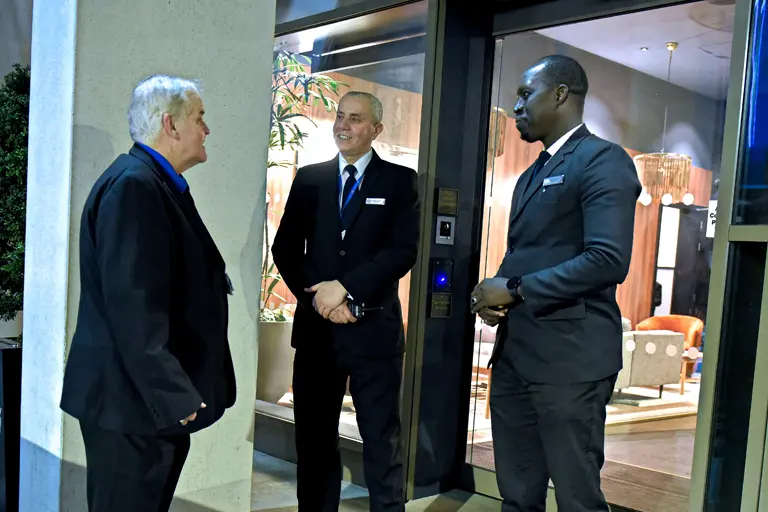
Apartment living has changed dramatically across Manchester over the last decade.
From luxury city-centre developments in Deansgate and Spinningfields, to high-density residential blocks in Salford Quays, Ancoats, Hulme, and Trafford, apartments now house thousands of residents, visitors, contractors, and service providers every single day.
That scale brings opportunity, but it also brings risk.
Modern apartment buildings are no longer quiet residential spaces. They are complex environments with:
- High footfall
- Shared access points
- Mixed-use layouts
- Vulnerable communal areas
- Valuable assets
- And residents with rising expectations around safety, professionalism, and accountability
Yet despite this, apartment security is still one of the most underestimated areas of property risk management.
The Reality: Apartment Buildings Are Prime Targets
Apartment buildings present a unique challenge for security planning because they sit in a grey area between:
- Private residential space
- Public-facing access
- Commercial-style operations
This makes them highly attractive to criminals.
Common threats facing apartment buildings in Manchester include:
- Tailgating and unauthorised access
- Package theft and mailroom crime
- Vehicle crime in underground or gated car parks
- Anti-social behaviour in communal areas
- Squatting in vacant or poorly monitored units
- Drug use and dealing in stairwells or bin stores
- Theft from storage cages and bike rooms
- Vandalism, arson attempts, and criminal damage
- Opportunistic burglaries targeting short-term lets
In city centre developments, the issue is amplified by density, anonymity, and constant movement.
Many incidents don’t look dramatic at first, until patterns emerge and residents start asking uncomfortable questions.
Why Manchester Apartment Blocks Face Higher Security Pressure
Manchester’s rapid urban growth has created conditions where apartment security must be taken seriously.
Key contributing factors include:
- A fast-growing population
- High student and rental turnover
- Mixed demographics within the same building
- Increased short-term lets and serviced apartments
- Large numbers of contractors and delivery drivers
- Proximity to nightlife, transport hubs, and retail zones
In many buildings, residents may not know who belongs and who doesn’t, and criminals exploit that uncertainty.
Security gaps are often discovered after an incident, not before.
“We Thought the Building Was Secure”
This is one of the most common phrases heard after a security incident.
Often, apartment buildings rely on:
- Key fobs that are easily copied or shared
- CCTV systems that are poorly positioned or unmanaged
- Intercom systems that residents bypass for convenience
- Doors that are frequently propped open
- No visible security presence
- No clear ownership of security responsibility
The result is a false sense of security.
On paper, the building appears protected.
In reality, no one is actively watching, managing, or responding.
Apartment Security Is About More Than Crime
While preventing crime is critical, professional apartment security in Manchester serves a much wider purpose.
Effective security protects:
- Residents – physical safety, peace of mind, wellbeing
- Property owners – asset value, reputation, insurance position
- Managing agents – compliance, accountability, incident control
- Developers – brand perception and long-term viability
- Local communities – reduced disorder and antisocial behaviour
Security failures don’t just cause damage, they erode trust.
Once residents feel unsafe, complaints rise, online reviews worsen, and management relationships suffer.
The Cost of Getting Apartment Security Wrong
Poor apartment security often leads to:
- Repeated incidents instead of isolated ones
- Escalating anti-social behaviour
- Increased insurance claims and premiums
- Resident dissatisfaction and turnover
- Damage to the building’s reputation
- Time-consuming complaint handling for managing agents
- Reactive, expensive fixes instead of structured prevention
In Manchester’s competitive residential market, reputation matters.
A building known for security issues will struggle to attract long-term residents, premium tenants, or investor confidence.
Why “Basic” Security No Longer Works
Many apartment blocks still rely on outdated or fragmented security approaches:
| Common Approach | Why It Fails in Modern Apartment Buildings |
|---|---|
| Passive CCTV only | Incidents are reviewed after the damage is done |
| Intercom-only access | Residents often buzz in unknown visitors |
| Key fob systems | Lost, copied, or shared without oversight |
| Reactive call-outs | No deterrent effect and slow response times |
| No on-site presence | Criminals operate unnoticed |
Security must now be active, layered, and professionally managed, especially in high-density urban environments like Manchester.
The Shift Toward Professional Apartment Security Services
Across Manchester, property managers and developers are increasingly recognising that apartment buildings require bespoke security strategies, not off-the-shelf solutions.
This includes:
- Trained security officers who understand residential environments
- Clear access control procedures
- Visible deterrence without creating an oppressive atmosphere
- Proactive patrols of communal areas
- Incident prevention rather than incident reaction
- Clear reporting, accountability, and escalation processes
Security is no longer just about guarding doors; it’s about controlling environments.
Apartment buildings across Manchester don’t face a single, uniform threat profile.
Security risks vary dramatically depending on location, building design, resident demographics, and how the property is managed. A solution that works for a gated development in Didsbury may be completely ineffective for a high-rise in the city centre.
Understanding these location-specific risks is the foundation of effective apartment security.
Why a One-Size-Fits-All Approach Fails
Many apartment security issues arise because risk is assumed rather than assessed.
Common mistakes include:
- Copying security setups from other buildings
- Installing CCTV without reviewing sightlines or behaviour patterns
- Treating apartments like offices or retail units
- Assuming residents will “challenge” strangers
- Relying on technology without human oversight
Manchester’s apartment landscape is too diverse for generic security.
High-Risk Apartment Locations Across Manchester
Different parts of the city experience very different security pressures.
City Centre Developments
Areas such as Deansgate, Spinningfields, Piccadilly, and Ancoats are high-density, high-movement environments.
Key risks include:
- Tailgating through secure entrances
- Opportunistic theft from communal areas
- Unauthorised access late at night
- Non-residents entering to use facilities
- Package and mail theft
- Anti-social behaviour linked to nightlife
Why these risks are higher:
- Constant foot traffic
- Residents frequently letting people in
- Visitors blending in unnoticed
- High use of delivery services
- Greater anonymity
City centre buildings often look secure but suffer from access control fatigue, residents prioritise convenience over security.
Student-Dense Areas
Areas near universities and transport links face different challenges.
Common issues include:
- High resident turnover
- Lost or shared access fobs
- Guests staying for extended periods
- Noise complaints escalating into conflict
- Increased vandalism in communal areas
Security challenge:
Buildings may technically be secure, but control erodes quickly as access credentials circulate beyond the resident base.
Mixed-Use Developments
Many Manchester apartment buildings sit above or alongside:
- Retail units
- Gyms
- Cafés
- Offices
- Co-working spaces
This creates blurred boundaries between public and private space.
| Risk Area | Why It Becomes a Problem |
|---|---|
| Shared entrances | Non-residents gain access to residential floors |
| Lift access | Visitors travel unchecked |
| Car parks | Used by non-residents |
| Fire exits | Propped open during business hours |
| Signage confusion | Residents assume access is permitted |
Mixed-use buildings require active separation of access, not just signage or trust.
Suburban Apartment Blocks
Lower-density areas often suffer from complacency, not lack of risk.
Typical issues include:
- Poorly lit car parks
- Minimal CCTV coverage
- No visible security presence
- Long gaps between incidents, until patterns emerge
- Targeted vehicle crime
- Storage and bike theft
Criminals often prefer quieter blocks where incidents go unnoticed for longer.
The Most Common Security Threats in Manchester Apartment Buildings
Below is a breakdown of recurring issues seen across apartment developments.
Tailgating and Unauthorised Access
This remains the single biggest vulnerability.
Why it happens:
- Residents don’t want to appear rude
- Visitors claim they “forgot their fob”
- Delivery drivers expect easy access
- Doors are held open for convenience
Once access is gained, criminals can:
- Explore floors unnoticed
- Test storage cages
- Target specific apartments
- Return later knowing the layout
Package Theft and Mailroom Crime
With the rise of online deliveries, apartment buildings have become prime targets.
Common vulnerabilities include:
- Unsecured mailrooms
- Parcels left in reception areas
- No audit trail for deliveries
- No monitoring of access patterns
This type of crime often escalates because it is:
- Low risk
- Hard to prove
- Rarely challenged
- Often repeated by the same offenders
Car Park and Vehicle Crime
Underground and gated car parks are frequently misunderstood as “secure.”
In reality, they are often:
- Poorly monitored
- Poorly lit
- Accessible via tailgating
- Unpatrolled for long periods
Common incidents include:
- Vehicle break-ins
- Catalytic converter theft
- Theft from storage cages
- Bike theft
- Damage and vandalism
Anti-Social Behaviour in Communal Areas
This includes:
- Loitering
- Drug use
- Loud gatherings
- Intimidation of residents
- Graffiti and vandalism
These behaviours often begin subtly and escalate when unchallenged.
Security gaps here directly impact resident wellbeing and retention.
Squatting and Unauthorised Occupation
Vacant or poorly monitored units can attract:
- Squatters
- Illegal sub-letting
- Criminal use of premises
- Fire and safety risks
This is more common in:
- Large developments
- Buildings with phased occupancy
- Blocks with poor inspection routines
Risk Profile by Apartment Area Type
| Area Type | Primary Risks | Secondary Risks |
|---|---|---|
| City Centre | Tailgating, theft, ASB | Car park crime |
| Student Areas | Access sharing, noise, damage | Theft |
| Mixed-Use | Unauthorised access | Boundary confusion |
| Suburban | Vehicle crime | Storage theft |
| New Developments | Vacant units | Squatting |
Why These Risks Are Often Missed
Apartment security failures rarely stem from negligence. They usually result from:
- Assumptions that systems are being used correctly
- Lack of visibility over daily behaviour
- No clear ownership of security
- Over-reliance on technology
- Reactive management after complaints
Security gaps develop slowly, then surface suddenly.
The Manchester Factor: Density + Movement + Anonymity
What makes Manchester particularly challenging is the combination of:
- High population density
- Constant movement
- Diverse resident profiles
- Mixed-use architecture
- Urban anonymity
Effective apartment security must be designed around human behaviour, not just physical infrastructure.
Setting the Foundation for the Right Security Strategy
Understanding these risks is critical before choosing:
- On-site security officers
- Concierge security
- Patrol-based services
- Access control upgrades
- CCTV improvements
Security should be risk-led, location-aware, and actively managed.
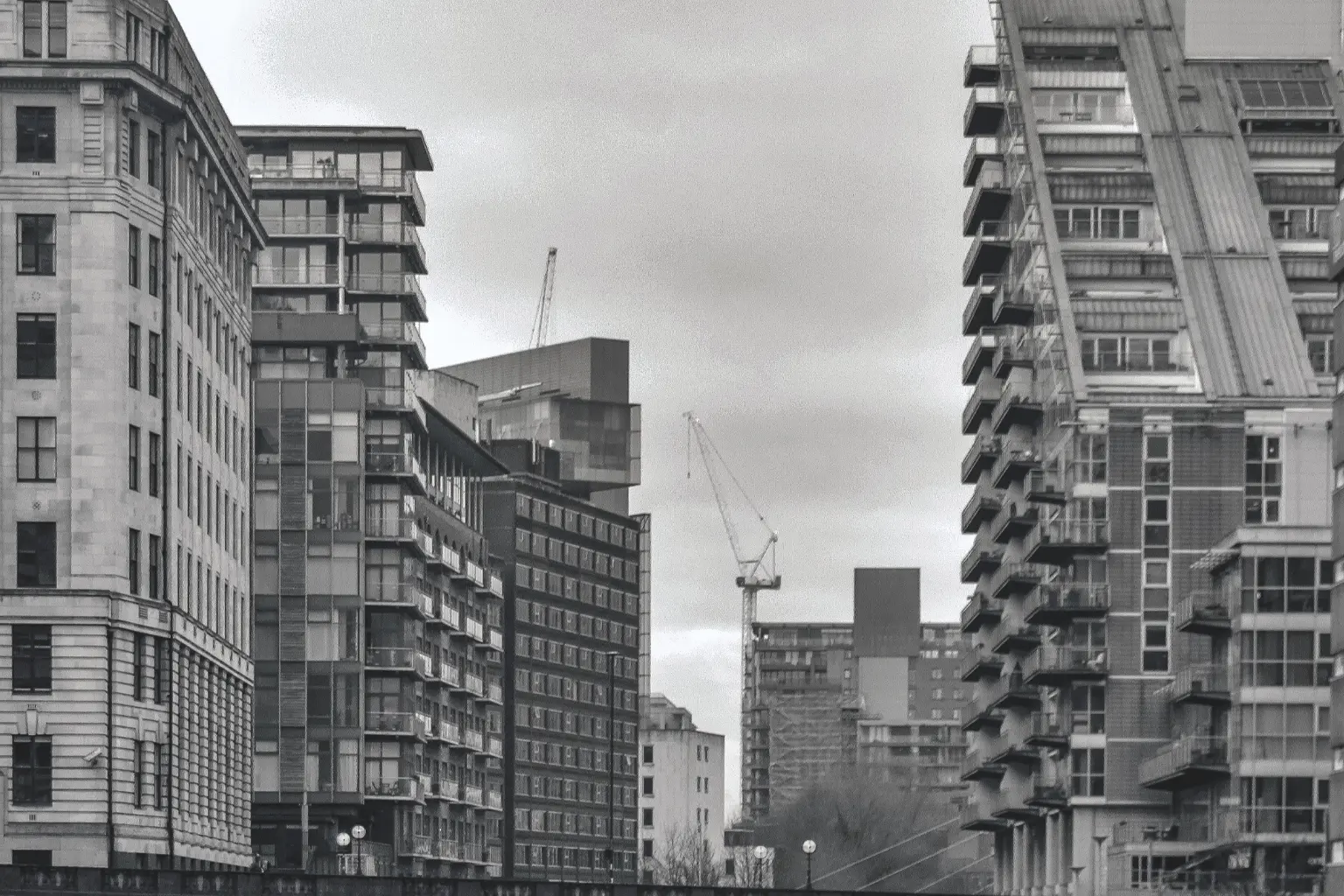
What Effective Apartment Building Security Looks Like in Manchester
Effective apartment security is not about adding more cameras, more signs, or more rules.
It’s about designing control into the way a building is actually used, day and night, weekday and weekend, peak hours and quiet periods.
The most secure apartment buildings in Manchester share one thing in common:
their security strategy is intentional, layered, and actively managed.
Moving Beyond “Installed” Security
Many apartment buildings rely on security that exists but isn’t used.
Examples include:
- CCTV that records but is rarely reviewed
- Access control systems that are bypassed daily
- Intercoms that are treated as doorbells
- Policies that exist but aren’t enforced
- No one clearly responsible for security outcomes
Effective security shifts the mindset from installed protection to operational control.
The Layered Security Model for Apartment Buildings
Modern apartment security works best when multiple layers support each other.
If one layer fails, another compensates.
Core Security Layers Explained
| Layer | Purpose | Example |
|---|---|---|
| Deterrence | Prevent incidents before they occur | Visible security presence |
| Access Control | Control who enters and where | Managed entry points |
| Monitoring | Observe behaviour patterns | CCTV with oversight |
| Response | Act when something goes wrong | Trained officers |
| Reporting | Accountability and improvement | Incident logs |
| Reassurance | Resident confidence | Professional conduct |
Reduce incidents, complaints, and uncertainty in your building
From city-centre high rises to suburban apartment blocks, many Manchester developments deal with recurring security issues that stem from small, unmanaged gaps. Professional apartment security focuses on prevention, visibility, and consistent standards, helping buildings move away from reactive responses and towards stable, well managed environments. If your Manchester apartment building would benefit from greater control, it starts with understanding what’s really happening day to day.
Concierge Security vs Patrol-Based Security
Not all apartment buildings need the same type of security.
Choosing the right model depends on layout, footfall, and risk profile.
Concierge-Style Apartment Security
Best suited for:
- City centre developments
- High-rise blocks
- Mixed-use buildings
- Buildings with reception areas
Key benefits:
- Controlled access at a single point
- Immediate challenge of unauthorised visitors
- Resident-facing service element
- Package and delivery oversight
- Incident escalation without delay
Concierge security acts as the control centre of the building.
Mobile or Static Patrol Security
Best suited for:
- Larger sites
- Multiple entrances
- Car parks and perimeter areas
- Suburban developments
Key benefits:
- Regular presence across all areas
- Flexible coverage
- Deterrence through unpredictability
- Early detection of issues
- Cost-effective coverage for lower-risk periods
Patrols are particularly effective when paired with CCTV and access control.
Active Access Control (Not Just Systems)
Technology alone doesn’t control access, people do.
Effective apartment security focuses on:
- Challenging tailgating politely but firmly
- Monitoring patterns of access misuse
- Identifying shared or abused credentials
- Securing vulnerable entry points
- Enforcing boundaries consistently
Residents often follow behaviour cues.
When access is actively managed, standards rise naturally.
CCTV That Supports Security, Not Just Evidence
CCTV should be a tool for prevention, not just investigation.
Effective CCTV strategies include:
- Cameras positioned for behaviour, not just coverage
- Monitoring high-risk areas (lifts, car parks, entrances)
- Integration with on-site security teams
- Regular review of incident hotspots
- Clear signage reinforcing monitoring
When CCTV is paired with human oversight, its effectiveness increases dramatically.
Managing Communal Areas Proactively
Communal areas are where most issues begin.
These include:
- Lobbies
- Stairwells
- Corridors
- Bin stores
- Bike rooms
- Car parks
- Shared terraces or gyms
Effective security ensures these spaces are:
- Regularly patrolled
- Well-lit
- Actively monitored
- Treated as shared assets, not no-man’s-land
Anti-social behaviour thrives in unclaimed space.
Clear Ownership and Escalation
One of the most overlooked elements of apartment security is responsibility.
Effective buildings always have:
- A clear chain of command
- Defined escalation procedures
- Documented incident handling
- Regular reporting
- Review and improvement cycles
This protects:
- Residents
- Managing agents
- Freeholders
- Developers
Security isn’t just about presence, it’s about process.
Balancing Security and Resident Experience
Good apartment security never feels oppressive.
The goal is to:
- Protect without intimidating
- Control without inconvenience
- Intervene without escalation
- Support residents, not police them
Professional apartment security teams are trained to operate in residential environments, not commercial or retail ones.
Tone, communication, and conduct matter.
What Residents Notice First
Residents don’t assess security by reading policies.
They notice:
- Who challenges strangers
- Whether issues are dealt with quickly
- If security staff are approachable
- How incidents are handled
- Whether problems repeat
Consistency builds confidence.
Security as a Living System
The most effective apartment buildings treat security as something that:
- Evolves with the building
- Adapts to resident behaviour
- Responds to incident trends
- Improves through review
Security should never be static.
Apartment Building Security Services Available in Manchester
Once risks are properly understood and a layered approach is agreed, the next step is selecting the right mix of apartment security services.
In Manchester, effective apartment security is rarely delivered through a single solution. Instead, it combines people, processes, and technology, scaled to suit the building’s size, layout, and risk profile.
Below is a breakdown of the core apartment security services used across Manchester developments, and how they are applied in practice.
On-Site Manned Security for Apartment Buildings
Static Security Officers
Static security officers are typically positioned at:
- Main entrances
- Reception desks
- Concierge areas
- Key access points within the building
Primary responsibilities include:
- Controlling access to the building
- Challenging unauthorised visitors
- Monitoring footfall and behaviour
- Supporting residents and guests
- Acting as a visible deterrent
- Escalating incidents appropriately
This model is particularly effective in high-footfall buildings where access control is critical.
Concierge Security Services
Concierge security combines front-of-house presence with security responsibility.
This is one of the most popular options for:
- City centre developments
- High-rise apartment blocks
- Mixed-use buildings
- Premium residential schemes
Concierge security typically covers:
- Access management
- Visitor handling
- Delivery coordination
- CCTV monitoring
- Incident response
- Resident assistance
The key difference between concierge security and standard reception staff is training, authority, and accountability.
Mobile and Patrol-Based Apartment Security
Internal Building Patrols
Internal patrols focus on communal areas such as:
- Stairwells
- Corridors
- Lift lobbies
- Bin stores
- Shared facilities
Benefits include:
- Early identification of issues
- Deterrence through unpredictability
- Prevention of loitering and ASB
- Rapid response to developing situations
Patrols are especially effective in buildings with multiple floors and low constant supervision.
External and Perimeter Patrols
External patrols are often overlooked but play a critical role.
They cover:
- Car parks
- Bike storage areas
- Loading bays
- Perimeters and entrances
- Fire exits
Many incidents occur outside the main residential areas, particularly vehicle crime and unauthorised access.
CCTV Monitoring and Security Support
CCTV as an Active Security Tool
CCTV is most effective when it is:
- Properly positioned
- Actively monitored
- Integrated into response procedures
Apartment CCTV systems should focus on:
- Entrances and exits
- Lift areas
- Car parks
- Vulnerable communal spaces
When CCTV is linked to trained security teams, it shifts from passive recording to incident prevention.
Remote Monitoring Support
Some apartment buildings use:
- Remote CCTV monitoring
- Out-of-hours support
- Alarm response services
This can be effective when combined with on-site presence during peak risk periods.
Access Control Management
Security services often support or manage:
- Key fob systems
- Access card issuance
- Visitor access protocols
- Contractor access control
- Lost credential handling
The value lies not in the system itself, but in how it’s enforced.
Unmanaged access systems are one of the most common failure points in apartment security.
Incident Response and Call-Out Services
When incidents occur, speed and professionalism matter.
Apartment security services may include:
- Immediate on-site response
- Coordination with emergency services
- Incident containment
- Evidence preservation
- Resident reassurance
A structured response prevents escalation and protects all parties involved.
Security Reporting and Accountability
Professional apartment security includes clear reporting, not just presence.
This typically covers:
- Daily activity logs
- Incident reports
- Trend analysis
- Recommendations for improvement
- Audit trails for managing agents
This documentation is critical for:
- Managing agents
- Freeholders
- Insurance providers
- Legal compliance
- Resident communication
Choosing the Right Service Mix
Different apartment buildings require different combinations of services.
Example Service Configurations
| Building Type | Typical Security Setup |
|---|---|
| City Centre High-Rise | Concierge + CCTV + Internal patrols |
| Mixed-Use Development | Concierge + Access control + External patrols |
| Suburban Block | Mobile patrols + CCTV support |
| New Development | Static guarding + patrols + vacant unit checks |
| Large Estate | Zoned patrols + monitored access |
The goal is coverage without excess, protection that fits the building, not overwhelms it.
Scaling Security Up or Down
One advantage of professional apartment security services is flexibility.
Security can be scaled for:
- Weekends
- Evenings
- High-risk periods
- Seasonal changes
- Known incident trends
This allows managing agents to remain cost-effective without compromising safety.
Why Professional Security Makes the Difference
The difference between managed and unmanaged buildings is rarely the equipment.
It’s the people and processes behind it.
Professional apartment security services provide:
- Consistency
- Accountability
- Deterrence
- Reassurance
- Control
And most importantly, they reduce the likelihood of repeat incidents.
How Apartment Security Is Tailored to Different Developments in Manchester
No two apartment buildings in Manchester operates the same way.
Differences in layout, occupancy, location, and usage patterns mean that effective apartment security must be tailored, not templated. Security that works perfectly in one development may fail completely in another.
This section explains how professional apartment security is adapted to suit different types of developments across Manchester.
City Centre High-Rise Developments
High-rise apartment buildings dominate Manchester’s city centre and inner districts.
These developments typically feature:
- Hundreds of residents
- Multiple floors and lift cores
- High visitor and delivery volumes
- Proximity to nightlife and transport hubs
- Increased anonymity
Security Priorities for City Centre Towers
Key focus areas include:
- Strict access control at entry points
- Lift and floor access monitoring
- Tailgating prevention
- Night-time security presence
- Management of late-night visitors
- Protection of concierge and reception areas
Typical Security Setup
| Element | Purpose |
|---|---|
| Concierge security | Front-of-house access control |
| CCTV monitoring | Entrances, lifts, communal areas |
| Internal patrols | Corridors, stairwells, amenities |
| Incident reporting | Accountability and review |
In these environments, visibility and consistency are critical. Residents feel safer when they see active security management, not just cameras.
Mixed-Use Apartment Developments
Many Manchester developments combine residential apartments with:
- Retail units
- Offices
- Gyms
- Hospitality venues
This creates overlapping access needs and blurred boundaries.
Unique Challenges
- Public access during business hours
- Residents sharing entrances with non-residents
- Increased contractor traffic
- Confusion around permitted access
- Fire exits used incorrectly
Tailored Security Approach
| Security Focus | Why It Matters |
|---|---|
| Zoned access control | Separates public and private areas |
| Concierge presence | Manages access transitions |
| Lift control | Prevents unauthorised floor access |
| Patrol coverage | Detects boundary breaches |
In mixed-use environments, clarity and control prevent most issues before they escalate.
Suburban Apartment Blocks
Suburban developments are often quieter, but that doesn’t make them low risk.
They typically feature:
- Fewer residents
- Larger external areas
- Car parks and garages
- Limited on-site staff
- Less daily oversight
Common Risks
- Vehicle crime
- Storage cage theft
- Tailgating during quiet periods
- Poor lighting or blind spots
- Delayed detection of issues
Tailored Security Solution
| Element | Role |
|---|---|
| Mobile patrols | Visible deterrence |
| External checks | Car parks and perimeters |
| CCTV support | Coverage of vulnerable areas |
In these settings, unpredictability is a powerful deterrent.
Student-Heavy Apartment Buildings
Student-occupied developments present a different challenge altogether.
Key Characteristics
- High turnover
- Frequent guests
- Shared access credentials
- Seasonal occupancy changes
- Increased noise and social activity
Security Focus Areas
- Access credential management
- Noise and behaviour monitoring
- Communal area oversight
- Conflict prevention
- Resident reassurance
Effective Security Measures
| Measure | Benefit |
|---|---|
| Concierge or on-site presence | Access oversight |
| Evening patrols | Behaviour management |
| Clear escalation procedures | Prevents repeat issues |
| Reporting systems | Supports managing agents |
Security here must be firm but fair, protecting residents without creating friction.
New Build & Phased Developments
New developments often go through extended periods of partial occupancy.
Common Risks
- Vacant units
- Incomplete access systems
- Contractor access issues
- Squatting risks
- Fire safety vulnerabilities
Tailored Security Strategy
| Security Need | Solution |
|---|---|
| Vacant unit checks | Scheduled inspections |
| Contractor control | Access logs and oversight |
| Temporary guarding | Early-phase deterrence |
| Handover support | Transition to live occupancy |
Security during early phases protects the long-term reputation of the development.
Older or Legacy Apartment Buildings
Older apartment blocks may lack modern security infrastructure.
Typical Challenges
- Limited CCTV coverage
- Outdated access systems
- Poor lighting
- No concierge space
- Layouts not designed for security
Adapted Security Approach
Rather than retrofitting expensive systems, professional security focuses on:
- Patrol-based deterrence
- Behaviour monitoring
- Strategic camera placement
- Process-led access control
- Resident education
Effective security doesn’t always require major upgrades; it requires smart deployment.
Tailoring Security to Resident Demographics
Security also adapts to who lives in the building.
| Resident Profile | Security Emphasis |
|---|---|
| Professionals | Discretion, reassurance |
| Families | Safety, visibility |
| Students | Behaviour management |
| Short-term lets | Access control |
| Mixed occupancy | Clear boundaries |
Good apartment security aligns with resident expectations, not against them.
Why Tailored Security Outperforms Generic Models
Generic security assumes buildings behave the same way.
Tailored security recognises that:
- Behaviour patterns differ
- Risk profiles shift
- Occupancy changes
- Urban pressure varies
This is why bespoke apartment security consistently delivers better outcomes with fewer incidents.
Apartment Security for Manchester Developments
Get clarity on your apartment building’s real security risks in Manchester
Apartment buildings across Manchester face very different security pressures depending on location, layout, and occupancy. A professional review can quickly highlight where access control breaks down, which communal areas are most exposed, and how risks are developing over time. If you manage an apartment building in Manchester, a focused security conversation can bring clarity and control, without unnecessary disruption.
Professional Standards, Training, and Compliance in Apartment Security in Manchester
Apartment security is not just about presence, it’s about professionalism, accountability, and compliance.
In residential environments, security teams operate in close proximity to people’s homes, families, and personal spaces. This means standards must be higher, not lower, than in many commercial settings.
For apartment buildings in Manchester, professional security must meet clear expectations around training, conduct, and legal compliance.
Why Professional Standards Matter in Residential Security
Unlike retail or construction sites, apartment buildings are:
- Lived-in environments
- Emotionally sensitive spaces
- Places where people expect privacy
- Shared by residents with different needs and vulnerabilities
Poorly trained or poorly managed security can quickly lead to:
- Resident complaints
- Escalation instead of resolution
- Reputational damage
- Legal exposure for managing agents
- Loss of trust within the building
Professional standards protect everyone involved.
Licensing and Legal Compliance
SIA Licensing
All security officers operating in apartment buildings must hold the appropriate Security Industry Authority (SIA) licence for their role.
This ensures officers have been vetted and trained to operate legally within the UK.
Right to Work and Vetting
Professional apartment security providers ensure:
- Right-to-work checks
- Identity verification
- Background screening
- Ongoing licence validation
This is particularly important in residential settings where trust is critical.
Residential-Specific Security Training
Apartment security is a specialist environment.
Officers must be trained not just in security procedures, but in how to work around residents professionally and respectfully.
Key training areas include:
- Access control and visitor management
- Conflict management and de-escalation
- Customer service and communication
- Safeguarding awareness
- Incident reporting and evidence handling
- Lone working protocols
- Emergency response procedures
This ensures officers can intervene calmly and appropriately, without unnecessary confrontation.
Conduct, Presentation, and Professionalism
In apartment buildings, how security officers behave and present themselves matters as much as what they do.
Professional apartment security teams are expected to demonstrate:
- Polite, respectful communication
- Calm authority
- Consistent enforcement of rules
- Discretion in sensitive situations
- Clear boundaries with residents and visitors
- Professional appearance at all times
Security should feel reassuring, not intrusive.
Data Protection and Confidentiality
Apartment security teams often handle sensitive information, including:
- Resident details
- Access credentials
- CCTV footage
- Incident reports
- Visitor logs
Professional providers operate under strict data protection protocols, ensuring compliance with UK GDPR requirements.
This protects:
- Residents’ privacy
- Managing agents’ legal position
- The integrity of investigations
Incident Management and Reporting Standards
Professional apartment security includes structured incident handling, not informal notetaking.
This typically involves:
- Time-stamped incident reports
- Clear descriptions of events
- Actions taken and outcomes
- Escalation records
- Supporting evidence where applicable
Good reporting supports:
- Trend analysis
- Risk reduction
- Transparent communication with stakeholders
- Insurance and legal requirements
Accountability and Supervision
Security officers should never operate in isolation.
Professional apartment security includes:
- Regular supervision
- Performance monitoring
- Site-specific instructions
- Clear escalation routes
- Continuous improvement processes
This ensures standards don’t slip over time.
Working With Managing Agents and Stakeholders
Effective apartment security teams work with managing agents, not separately from them.
This includes:
- Regular reviews
- Clear communication channels
- Feedback loops
- Adaptation to changing risks
- Alignment with building policies
Security becomes an extension of the management function, not an afterthought.
Why Cutting Corners Creates Risk
Attempting to reduce costs by compromising on standards often leads to:
- Increased incidents
- Poor resident relations
- High staff turnover
- Inconsistent enforcement
- Reactive crisis management
In residential environments, professionalism is a risk control measure, not a luxury.
Building Long-Term Confidence
When standards are clear and consistently applied, residents:
- Feel safer
- Trust management decisions
- Are more likely to comply with access rules
- Report issues earlier
- Remain in the building longer
Professional apartment security supports community stability, not just crime prevention.
The Cost vs Value of Professional Apartment Security in Manchester
When apartment security is discussed, cost is often the first question, and the most misunderstood.
The real question isn’t “How much does apartment security cost?”
It’s “What does poor security end up costing if it fails?”
In Manchester’s apartment market, the difference between low-cost security and professional, well-managed security is rarely visible on day one, but it becomes very clear over time.
Why Cheap Security Is Rarely Cheap
Low-cost security models often focus on minimum presence, not outcomes.
This can include:
- Undertrained officers
- High staff turnover
- Minimal supervision
- Poor reporting
- No real deterrent effect
- Reactive rather than preventative behaviour
These models may reduce short-term spend, but they frequently lead to:
- Repeated incidents
- Escalating anti-social behaviour
- Increased complaints
- Higher insurance premiums
- Loss of resident confidence
- Time-intensive issue management for agents
The hidden costs quickly outweigh the apparent savings.
The True Cost of Security Failures
Security failures don’t just result in one-off incidents.
They create patterns.
Common Cost Impacts of Poor Apartment Security
| Issue | Resulting Cost |
|---|---|
| Repeated theft | Insurance claims & excess |
| Vehicle crime | Resident dissatisfaction |
| ASB escalation | Management time & complaints |
| Unauthorised access | Increased burglary risk |
| Poor incident handling | Legal & reputational exposure |
| Resident churn | Void periods & re-letting costs |
Many of these costs are indirect, which is why they’re often underestimated.
What Drives the Cost of Apartment Security?
Professional apartment security pricing is influenced by several factors.
Key Cost Drivers
- Size and layout of the building
- Number of access points
- Footfall and visitor volume
- Risk profile and incident history
- Level of on-site presence required
- Hours of coverage
- Integration with technology (CCTV, access control)
- Reporting and management requirements
A well-designed security strategy aims to control these costs, not inflate them.
Security as an Investment, Not an Expense
The most effective apartment developments view security as part of their asset protection strategy.
Professional security delivers value through:
- Incident prevention
- Deterrence
- Faster issue resolution
- Reduced insurance exposure
- Improved resident satisfaction
- Stronger building reputation
- Easier management oversight
These benefits compound over time.
Comparing Cost vs Value
| Approach | Short-Term Cost | Long-Term Outcome |
|---|---|---|
| Minimal guarding | Low | Repeated issues |
| Reactive call-outs | Medium | Inconsistent control |
| Technology-only | Medium | Gaps remain |
| Professional layered security | Managed | Fewer incidents, better outcomes |
The most cost-effective solution is usually the one that prevents problems from occurring at all.
How Professional Security Reduces Overall Spend
Professional apartment security helps reduce costs by:
- Identifying risks early
- Preventing escalation
- Reducing reliance on emergency responses
- Supporting evidence-led insurance claims
- Minimising damage and disruption
- Allowing targeted, time-based coverage
This enables managing agents to spend smarter, not simply spend more.
Resident Retention and Property Value
Residents don’t just choose apartments based on finishes or location.
They choose based on:
- How safe they feel
- How issues are handled
- Whether problems repeat
- Whether management appears in control
Good security contributes directly to:
- Higher retention
- Positive reviews
- Reduced voids
- Long-term asset value
In competitive Manchester developments, this matters.
The Cost of Doing Nothing
One of the most expensive decisions is inaction.
Buildings without professional security often end up paying for:
- Emergency fixes
- Crisis management
- Reputation repair
- Retrofitted solutions
- Loss of trust
Proactive security costs less than reactive recovery.
Getting the Balance Right
Effective apartment security is not about maximum coverage; it’s about appropriate coverage.
The goal is to:
- Deploy the right services
- At the right times
- In the right areas
- Based on real risk
When security is designed properly, cost and value align.
How to Choose the Right Apartment Security Provider in Manchester
Choosing an apartment security provider isn’t just a procurement decision, it’s a risk management decision.
The right provider reduces incidents, supports residents, and makes buildings easier to manage.
The wrong one creates friction, complaints, and hidden costs.
In a city like Manchester, where apartment developments vary hugely in size, layout, and risk, selecting the right security partner is critical.
Start With Understanding Your Building
Before comparing providers, it’s essential to understand your own building’s needs.
Key questions to ask internally include:
- How many access points does the building have?
- When do incidents typically occur?
- Is footfall consistent or variable?
- Do we have issues with tailgating or ASB?
- Are communal areas actively used or neglected?
- Is the building mixed-use or residential-only?
- Are residents long-term, short-term, or a mix?
A good provider will ask these questions first, not jump straight to pricing.
What a Good Apartment Security Provider Should Do First
Professional providers don’t start by selling services.
They start by understanding risk.
A competent apartment security provider will:
- Ask detailed questions about the building
- Review layouts and access points
- Discuss past incidents and trends
- Understand resident demographics
- Identify pressure points
- Recommend solutions based on evidence, not assumptions
If a provider doesn’t want to understand your building, they won’t protect it properly.
Key Qualities to Look for in an Apartment Security Provider
Residential Security Experience
Apartment security is not the same as retail, construction, or event security.
Look for providers with proven experience in:
- Residential environments
- High-density apartment blocks
- Concierge or front-of-house security
- Mixed-use developments
- Resident-facing roles
Residential experience ensures officers understand tone, discretion, and escalation.
Professional Standards and Compliance
A reputable provider should clearly demonstrate:
- SIA-licensed officers
- Structured training programmes
- Right-to-work compliance
- Supervision and management oversight
- Clear policies and procedures
If standards are vague, performance usually is too.
Ability to Tailor Security, Not Template It
Avoid providers who offer the same solution to every building.
Instead, look for those who:
- Adapt coverage by time of day
- Adjust patrol frequency based on risk
- Combine on-site presence with technology
- Scale services up or down as needed
- Review and refine security over time
Security should evolve with the building.
Clear Reporting and Accountability
Good apartment security is measurable.
Ask about:
- Incident reporting processes
- Daily activity logs
- Communication with managing agents
- Review meetings
- Recommendations for improvement
Reporting is what turns security from a cost into a management tool.
Questions Managing Agents Should Ask Security Providers
Use these questions to separate competent providers from weak ones:
- How do you prevent tailgating in apartment buildings?
- How do your officers handle anti-social behaviour?
- What training do officers receive for residential settings?
- How do you manage access during busy periods?
- How do you report incidents and trends?
- Who supervises officers on site?
- How do you adapt security when risks change?
- How do you balance resident experience with enforcement?
A strong provider will answer confidently and specifically.
Red Flags to Watch Out For
Be cautious of providers who:
- Focus only on hourly rates
- Don’t ask about your building
- Can’t explain how they prevent incidents
- Offer no reporting or oversight
- Have high staff turnover
- Rely solely on CCTV or access systems
- Avoid discussions about escalation or accountability
Cheap, vague, or rushed proposals usually lead to problems later.
The Importance of Cultural Fit
Security officers become a visible part of your building’s daily life.
The right provider will align with:
- Your management style
- Resident expectations
- Building culture
- Brand positioning of the development
Security that feels out of place can be just as disruptive as no security at all.
Long-Term Partnership vs Short-Term Fix
The most effective apartment security arrangements are long-term partnerships, not short-term fixes.
Look for providers who:
- Review performance regularly
- Adapt to changes in occupancy
- Proactively suggest improvements
- Treat security as a shared responsibility
- Invest in officer retention and training
Consistency builds trust, and trust reduces risk.
Making a Confident Decision
Choosing the right apartment security provider in Manchester comes down to three things:
- Understanding your building
- Assessing provider competence
- Aligning security with real-world behaviour
When these align, security becomes a stabilising force, not a constant concern.
Common Apartment Security Mistakes, and How Developments in Manchester Avoid Them
Most apartment security failures don’t happen because people don’t care.
They happen because small compromises slowly become normalised, until an incident forces everyone to pay attention.
Across Manchester, the same security mistakes appear again and again in apartment buildings of all sizes. The most successful developments aren’t perfect, they’re simply proactive in recognising and correcting these issues early.
Mistake 1: Assuming Technology Alone Is Enough
One of the most common misconceptions is that installing CCTV, access control, or intercom systems automatically makes a building secure.
In reality:
- Cameras don’t challenge behaviour
- Fobs don’t enforce rules
- Intercoms don’t verify intent
Without human oversight, technology becomes passive.
How Well-Managed Buildings Avoid This
- CCTV is actively monitored or supported by patrols
- Access control is reinforced by visible security presence
- Systems are reviewed based on how people actually use them
- Weak points are adjusted, not ignored
Technology supports security, it doesn’t replace it.
Mistake 2: Letting Tailgating Become “Normal”
Tailgating often starts as politeness and ends as a major vulnerability.
Common justifications include:
- “They look like they live here”
- “They said they forgot their fob”
- “I didn’t want to be rude”
Over time, this creates a culture where anyone can enter.
How Good Developments Prevent It
- Clear access rules are enforced consistently
- Security officers challenge politely and professionally
- Residents are supported, not blamed
- Entry points are actively managed during peak hours
When standards are visible, behaviour improves naturally.
Mistake 3: Ignoring Early Signs of Anti-Social Behaviour
Anti-social behaviour rarely appears overnight.
It usually starts with:
- Loitering
- Noise complaints
- Minor damage
- Unauthorised gatherings
- Use of communal areas for the wrong purpose
When left unchecked, these behaviours escalate.
How Proactive Buildings Respond
- Patrols identify early warning signs
- Issues are addressed calmly and quickly
- Patterns are recorded and reviewed
- Repeat behaviour is escalated appropriately
- Residents see action being taken
Early intervention prevents long-term problems.
Mistake 4: Treating Security as a Reactive Service
Calling security only after something goes wrong is a false economy.
Reactive models lead to:
- Delayed responses
- Escalation of incidents
- Frustrated residents
- Repeated problems
How Effective Security Is Used
- Security presence is scheduled around risk periods
- Patrols focus on vulnerable areas
- Issues are anticipated, not chased
- Trends inform coverage decisions
Prevention always costs less than recovery.
Mistake 5: No Clear Ownership of Security
In many apartment buildings, security sits in a grey area between:
- Managing agents
- Freeholders
- Concierge teams
- Contractors
When ownership isn’t clear, accountability disappears.
How Successful Developments Handle This
- One party has clear responsibility for security oversight
- Escalation routes are defined
- Reporting is shared with stakeholders
- Decisions are documented and reviewed
Security works best when someone owns it.
Mistake 6: Underestimating Car Parks and External Areas
Many incidents don’t happen in apartments; they happen around them.
Commonly overlooked areas include:
- Underground car parks
- Bike storage rooms
- Bin stores
- Fire exits
- Rear entrances
Criminals look for areas with low visibility and low footfall.
How Good Security Strategies Respond
- External patrols are included
- Lighting and CCTV coverage are reviewed
- Vulnerable areas are checked regularly
- Access routes are controlled and monitored
Out-of-sight should never mean out-of-mind.
Mistake 7: Choosing Security Based on Price Alone
Selecting the cheapest provider often results in:
- High staff turnover
- Inconsistent coverage
- Poor resident interaction
- Minimal reporting
- Weak deterrence
The true cost shows up later, in incidents, complaints, and lost confidence.
How Smart Developments Choose Differently
- Providers are assessed on competence, not just cost
- Residential experience is prioritised
- Reporting and accountability are valued
- Security is treated as a long-term partnership
Value is measured in outcomes, not invoices.
Mistake 8: Failing to Review and Adapt Security Over Time
Buildings change.
So do risks.
Common triggers include:
- New residents
- Changes in occupancy
- Seasonal behaviour shifts
- New nearby developments
- Incident patterns
Security that never evolves eventually becomes ineffective.
How Strong Management Teams Stay Ahead
- Security performance is reviewed regularly
- Patrol routes and schedules are adjusted
- Feedback from residents is considered
- Improvements are implemented proactively
Security should be dynamic, not static.
The Common Thread: Behaviour, Not Just Infrastructure
Every mistake above shares one root cause:
Security decisions that focus on infrastructure rather than human behaviour.
The most secure apartment buildings in Manchester understand that:
- People shape risk
- Behaviour creates vulnerabilities
- Presence influences conduct
- Consistency builds safety
When security is aligned with how buildings are actually used, incidents fall, and confidence rises.
Apartment Building Security in Manchester, Getting It Right
Apartment security isn’t about reacting to incidents.
It’s about preventing them from becoming normal.
Across Manchester, the most successful apartment developments share a common approach to security:
- They understand their risks
- They design security around real behaviour
- They invest in professionalism
- They review and adapt over time
- And they treat security as part of building management, not an add-on
When this happens, buildings feel calmer, safer, and more controlled. Residents trust the environment. Managing agents spend less time firefighting. Incidents reduce rather than repeat.
That’s what “getting it right” looks like.
What Effective Apartment Security Achieves
When apartment security is properly planned and professionally delivered, it achieves far more than crime reduction.
It provides:
- Clear control of who enters the building
- Early intervention before issues escalate
- Reassurance for residents and visitors
- Protection of vehicles and communal areas
- Reduced complaints and disputes
- Better reporting and accountability
- Long-term protection of the asset and its reputation
Security becomes a stabilising force, not a constant concern.
Why Manchester Apartment Buildings Can’t Rely on Assumptions
Manchester’s apartment landscape continues to evolve.
Higher density, mixed-use developments, increased mobility, and changing resident expectations mean that yesterday’s security approach often isn’t good enough today.
Buildings that assume:
- “It hasn’t happened yet”
- “The system is installed”
- “Residents will challenge people”
- “CCTV will deal with it”
are often the ones that end up reacting after the fact.
Professional apartment security replaces assumptions with structure, visibility, and accountability.
Security That Fits the Building, Not the Other Way Around
The most important takeaway is this:
There is no single “correct” apartment security model.
What works is:
- Security tailored to the building’s layout
- Coverage aligned to risk periods
- Officers trained for residential environments
- Clear ownership and escalation
- Ongoing review and refinement
When security fits the building, it feels natural, not forced.
A Professional Partner Makes the Difference
Delivering this level of security requires more than uniforms and rotas.
It requires:
- Experience in residential environments
- Strong standards and supervision
- Officers who understand discretion and authority
- Clear communication with managing agents
- A proactive, risk-led mindset
This is where working with an experienced apartment security provider makes a measurable difference.
Apartment Building Security in Manchester, Delivered with Purpose
Leisure Guard Security provides tailored apartment building security services across Manchester, supporting:
- City centre high-rise developments
- Mixed-use residential schemes
- Suburban apartment blocks
- New and phased developments
- Student and professional residences
Our approach focuses on control, prevention, professionalism, and accountability, not box-ticking or generic solutions.
We work closely with managing agents, freeholders, and developers to ensure security is aligned with how buildings are actually used, day and night.
Take the Next Step
If you’re responsible for an apartment building in Manchester and want to:
- Reduce incidents and complaints
- Improve resident confidence
- Strengthen access control
- Create a safer, more controlled environment
Then the right first step is a conversation, not a commitment.
A professional review of your building’s security can quickly highlight:
- Where risks exist
- What’s working well
- Where small changes could make a big difference
Good apartment security doesn’t draw attention to itself.
It quietly keeps everything working as it should.
And when it’s done properly, people only notice it when it’s missing.
Frequently Asked Questions: Apartment Building Security in Manchester
What is apartment building security?
Apartment building security refers to the professional management of safety, access, and behaviour within residential apartment developments. This can include concierge security, mobile patrols, CCTV monitoring, access control enforcement, incident response, and reporting, all designed to protect residents, property, and communal areas.
Do apartment buildings in Manchester really need professional security?
In many cases, yes.
Manchester apartment buildings often experience high footfall, shared access points, mixed occupancy, and proximity to transport hubs and nightlife. These factors increase risks such as tailgating, theft, vehicle crime, and anti-social behaviour. Professional security helps manage these risks proactively rather than reactively.
What are the most common security issues in apartment buildings?
Common issues include:
Unauthorised access and tailgating
Package and mail theft
Vehicle crime in car parks
Anti-social behaviour in communal areas
Squatting or misuse of vacant units
Poor incident handling and escalation
These problems often escalate when buildings rely on passive systems without active oversight.
Is CCTV alone enough to secure an apartment building?
No.
CCTV is a valuable tool, but on its own it is reactive. Footage is usually reviewed after an incident has already occurred. CCTV is most effective when combined with trained security personnel who can monitor behaviour, intervene early, and respond in real time.
What is the difference between concierge security and standard reception staff?
Concierge security officers are trained security professionals, not just front-of-house staff.
They are licensed, trained in access control and conflict management, authorised to challenge behaviour, and accountable for security outcomes. Standard reception staff typically do not have the training, authority, or responsibility to manage security risks.
How does apartment security improve resident satisfaction?
Professional apartment security improves resident satisfaction by:
Creating a visible sense of control
Reducing repeated incidents
Addressing issues quickly and calmly
Providing reassurance in communal areas
Supporting fair and consistent enforcement
Residents feel safer when they see problems dealt with, not ignored.
Can apartment security be tailored to different types of buildings?
Yes — and it should be.
Effective apartment security is tailored based on factors such as:
City centre vs suburban location
High-rise vs low-rise layout
Student, professional, or mixed occupancy
New build vs legacy stock
Presence of retail or commercial units
A one-size-fits-all approach rarely works in residential environments.
Is apartment security expensive?
The cost of apartment security depends on the size, layout, risk profile, and level of coverage required.
However, professional security often reduces overall costs by preventing incidents, reducing complaints, limiting insurance claims, and improving resident retention. In many cases, proactive security costs less than repeated reactive responses.
Who is responsible for apartment building security?
Responsibility typically sits with managing agents, freeholders, or developers, depending on the structure of the building.
Professional security providers support this responsibility by delivering on-site presence, reporting, and accountability, but clear ownership and escalation processes are essential for security to be effective.
How quickly can apartment security be put in place?
In many cases, professional apartment security can be implemented quickly, particularly for patrols, concierge services, or interim coverage.
A site review is usually carried out first to understand risks, access points, and requirements before services are deployed.
What should managing agents look for in an apartment security provider?
Managing agents should look for providers who:
Have experience in residential environments
Offer tailored, risk-led solutions
Employ licensed and well-trained officers
Provide clear reporting and accountability
Understand resident experience as well as security
Price alone should never be the deciding factor.
Does apartment security help with insurance and compliance?
Yes.
Professional security can support insurance requirements by reducing claims, providing incident documentation, and demonstrating proactive risk management. Clear reporting and consistent security standards also help managing agents demonstrate due diligence.
Can security coverage be adjusted over time?
Absolutely.
One of the benefits of professional apartment security is flexibility. Coverage can be increased or reduced based on:
Incident trends
Seasonal changes
Occupancy levels
High-risk periods
Building use changes
Security should evolve with the building.