
Why University Security Matters More Than Ever
University security services are often misunderstood.
From the outside, a campus can look like a relatively straightforward environment to protect. There are lecture theatres, libraries, offices, student accommodation, receptions and social spaces, all operating within what appears to be a structured setting. But anyone who has worked in higher education, estates, operations or campus services knows the reality is very different.
A modern university is not just a group of buildings. It is a live, constantly changing environment made up of thousands of students, staff, visitors, contractors and members of the public, all moving through very different spaces for very different reasons. Some are there to study. Some are there to work. Some are attending events. Some are living on site. Some are simply passing through. That creates a security challenge that is far more complex than many people realise.
Unlike a traditional office building or industrial site, a university campus is expected to feel open, welcoming and accessible. It is a place of learning, development, research and community. People should feel comfortable there. They should be able to move around confidently, use shared spaces, attend classes, visit receptions, access facilities and engage with campus life without feeling like they are entering a restricted or intimidating environment.
That is what makes university security such a delicate balance.
Too little security presence, and a campus can quickly begin to feel unmanaged. Students may feel unsupported, staff may feel exposed, and smaller issues can escalate because there is no visible sense of oversight. But too much of the wrong kind of presence can create a very different problem. It can make a university feel overly controlled, impersonal or unwelcoming, which runs directly against the culture most higher education institutions are trying to create.
Good university security sits in the middle. It provides visible reassurance without being oppressive. It supports people without disrupting the atmosphere of campus life. And it recognises that not every security issue in a university setting looks like a traditional “security incident”.
In higher education, security is not just about preventing theft, monitoring access points or responding to anti-social behaviour. It is also about supporting safeguarding, identifying welfare concerns, helping vulnerable individuals, de-escalating difficult situations, and giving students and staff confidence that there is someone there when they need help.
That matters more than ever.
Universities today are under pressure from multiple directions. They are expected to deliver a strong student experience, protect wellbeing, maintain safe campuses, manage public-facing spaces, handle major events, and respond effectively to incidents, all while operating in large, complex and often open environments. As campuses continue to evolve, security can no longer be viewed as a narrow function sitting on the edge of operations. It is part of the wider experience, the wider culture, and the wider reputation of the institution.
When university security is done well, most people do not think about it in dramatic terms. They simply feel that the campus is calm, well managed, supportive and under control. Students feel more confident walking across campus. Staff feel more reassured working late or dealing with difficult situations. Visitors feel that the institution is professional and organised. In that sense, security does far more than protect property. It helps shape how the entire campus feels.
That is why university security matters more than ever, not because campuses should feel heavily guarded, but because they should feel safe, supported and confidently managed for everyone who uses them.
Why a University Campus Is One of the Most Complex Environments to Secure
One of the biggest mistakes people make when thinking about university security is assuming that a campus is a single environment with a single set of risks.
It isn’t.
A university is more like a small town than a standard site. Within one institution, you may find teaching buildings, libraries, laboratories, student accommodation, receptions, sports facilities, cafés, event spaces, public-facing venues and open outdoor areas, all operating at different times, in different ways, with different types of people moving through them. Some spaces are heavily controlled. Others are deliberately open. Some are busy all day. Others come alive at night. Some require a strong front-of-house presence, while others need quieter observation and rapid escalation when something feels wrong.
That is what makes a campus one of the most complex environments to secure properly.
A lecture theatre, for example, brings very different challenges from a hall of residence. In one, the priority may be smooth access, protecting teaching spaces, and ensuring the building feels well managed throughout the day. In the other, the issues might include late-night noise, welfare concerns, unauthorised visitors, vulnerability, and making students feel safe where they live. A library creates its own dynamic again, often quieter, longer opening hours, periods of high pressure around exams, and the need for security staff who can be present without disrupting the study environment.
The same goes for receptions and administrative buildings, which are often the first point of contact for visitors, prospective students and families. In these areas, security is not only about control. It is also about professionalism, first impressions, and helping the institution present itself as organised, calm and safe. Sports facilities, open days, graduation events and student social spaces all bring further variations in footfall, behaviour, crowd management and response expectations.
This means there is no such thing as a one-size-fits-all approach to university security.
What works in a corporate office often does not work on a campus. A generic security presence may tick a box on paper but still fail to meet the very different needs of the spaces it is supposed to protect. Universities need a more nuanced approach, one that understands how different environments function, how people use them, and how security should adapt without changing the overall feel of the campus.
Another factor that adds to the complexity is the sheer number of different people involved. Security on a university campus is not only about students and staff. It also includes contractors, temporary workers, visitors, conference delegates, delivery drivers, maintenance teams, members of the public, and prospective students and their families at certain times of year. Each of those groups has different access needs, different expectations, and different levels of familiarity with the site.
That creates a constant need for awareness, communication and judgement.
Officers working in a university setting often have to assess situations quickly: who should be here, who needs help, what feels normal in this environment, and what doesn’t? That kind of judgement only comes when security teams are properly briefed, campus-aware, and supported by a structure that recognises the complexity of the environment they are working in.
The table below shows how varied a single campus can be from a security point of view.
| Campus Area | Typical Use | Key Security Considerations |
|---|---|---|
| Lecture theatres and teaching buildings | Classes, seminars, academic activity | Access control, building oversight, smooth movement of students and staff, protecting teaching spaces |
| Libraries | Study, quiet working, extended hours | Visible reassurance, low-disruption presence, late-night support, managing behaviour calmly |
| Halls of residence | Student accommodation and day-to-day living | Welfare concerns, visitor control, late-night incidents, student reassurance, safeguarding awareness |
| Reception and admin buildings | Visitor access, enquiries, front-of-house operations | Professional appearance, visitor management, approachable presence, reporting concerns early |
| Sports and leisure facilities | Classes, public use, events, community activity | Mixed users, changing footfall, event management, access control and incident response |
| Student social spaces / unions | Social activity, events, gatherings | Conflict de-escalation, visible control, behaviour management, post-event monitoring |
| Open campus areas | Movement between buildings, informal use, public access | General visibility, reassurance, public interaction, identifying unusual activity |
When you look at campus life in that way, it becomes much clearer why university security cannot be treated as a simple guarding function. It is a layered, people-heavy, environment-specific role that depends on awareness, adaptability and the ability to work across multiple kinds of space without losing consistency.
That complexity is exactly why the right security strategy matters. Universities do not just need cover. They need security that understands campus life, different building types, shifting patterns of use, and the importance of protecting people without making the environment feel restricted or heavy-handed.
University Security Is About People, Not Just Buildings
One of the most important things to understand about university security is that it cannot be reduced to locks, doors, gates and patrol routes.
Of course, physical security matters. Universities still need to protect buildings, control access, respond to incidents and maintain oversight across a large and often varied estate. But if that is all security is focused on, it misses the bigger picture. A university is not just a collection of buildings. It is a community. And that means the most effective security approach is one that starts with people.
Students, staff and visitors do not experience campus security in abstract terms. They experience it emotionally and practically. They notice whether a building feels calm or unmanaged. They notice whether the people at reception appear aware and approachable. They notice whether there is someone around when they need help, whether that help is related to directions, access, vulnerability, conflict, welfare or simply feeling uncomfortable in a space.
That is why university security should never be seen as purely reactive.
In a higher education setting, security staff are often among the most visible representatives of the institution, particularly outside normal office hours. They may be the first people a student speaks to when something feels wrong, the first people staff call when they feel unsupported, or the first people visitors encounter when arriving on campus. That makes their role much broader than traditional guarding. They are not simply there to stop problems. They are there to provide presence, reassurance and confidence.
For students, this matters a great deal.
University life often involves living away from home, navigating unfamiliar environments, working late, attending social events, studying in shared spaces and moving around campus at all hours. For some students, that is an exciting sense of independence. For others, it brings anxiety, vulnerability and moments where knowing that support is nearby makes a real difference. A visible, calm and approachable security presence can help bridge that gap. It can make students feel that there is somebody there if they need help, without making them feel watched or controlled.
For staff, the same principle applies in a different way. Academics, professional services teams, estates staff, cleaners, reception teams and support staff all benefit from knowing that there is a reliable and professional security presence across campus. That is particularly true in the evenings, during quieter periods, or in situations where someone feels unsafe, uncertain or exposed. Security supports not just the buildings, but the confidence of the people working within them.
Visitors experience this too. A parent attending an open day, a conference delegate arriving at reception, or a contractor moving between campus buildings will often form an impression of the institution based on how safe, organised and well managed it feels. In that sense, security contributes directly to the professionalism and reputation of the university itself.
This people-first approach also reflects the kind of issues security teams often deal with on campus. Not every situation is a clear-cut “security incident” in the traditional sense. In many cases, the challenge is about:
- supporting a vulnerable individual
- responding to a welfare concern
- calming a tense situation before it escalates
- helping someone who is lost, distressed or unsure where to turn
- identifying behaviour that may not yet be criminal, but does not feel right
That requires more than a physical presence. It requires awareness, judgement, communication skills and the ability to respond with professionalism and care.
A university security team that understands people can have a much wider positive impact than many institutions realise. It can help students feel safer moving around campus. It can help staff feel more supported. It can encourage earlier reporting of concerns because people know they will be taken seriously. And it can reinforce the idea that the campus is not just protected but actively cared for.
This is where the difference between generic cover and the right campus-aware security presence becomes very clear. A security officer who understands the culture of a university environment, who knows how to engage with students respectfully, who can support staff appropriately, and who can distinguish between a welfare issue and a disciplinary one, adds far more value than someone who simply occupies a post.
At its best, university security becomes part of the wider support structure of the institution. It helps create an environment where people feel able to learn, work, live and move around with greater confidence. That is why university security is about far more than buildings. It is about people, and the experience those people have every day on campus.
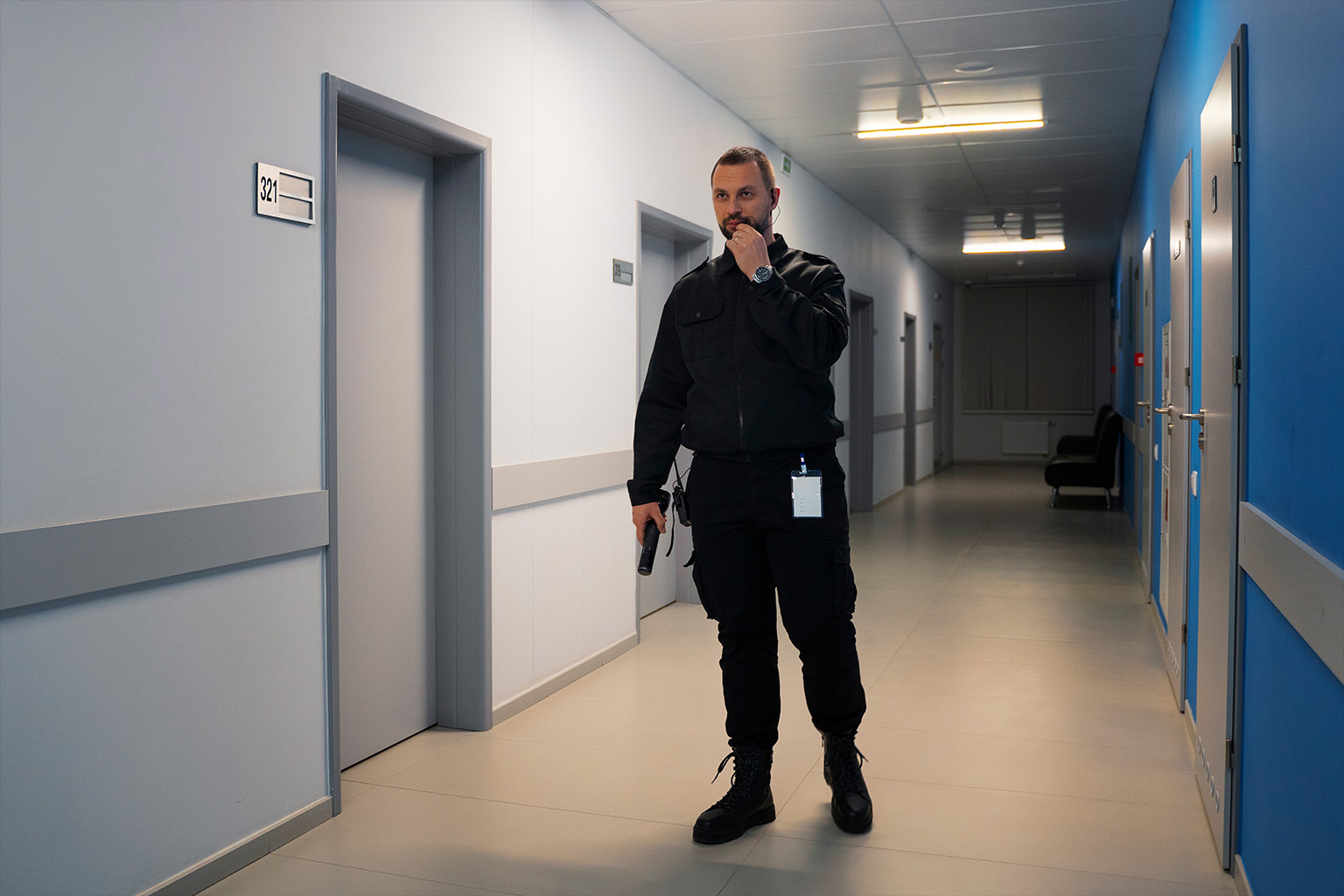
Why a people-first security approach matters on campus
A people-focused security model helps universities:
- create visible reassurance for students and staff
- support safeguarding and welfare responses
- improve confidence in campus operations
- strengthen the university’s professional image
- reduce the chance of small concerns becoming larger incidents
- encourage earlier reporting of problems or unusual behaviour
When universities get this right, security becomes more than an operational function. It becomes part of what helps a campus feel safe, organised and supportive in the eyes of everyone who uses it.
The Main Security Risks Universities Need to Think About
University campuses are busy, open and constantly changing environments, which means the security risks they face are rarely limited to one simple category.
That is one of the reasons university security needs a more thoughtful approach than many people expect. The challenge is not just preventing crime or responding to emergencies. It is understanding the range of issues that can develop across different parts of campus, at different times of day, and among different groups of people.
Some risks are obvious. Theft, unauthorised access and anti-social behaviour are familiar concerns across most campuses. Others are less visible, but just as important, safeguarding, welfare incidents, lone working, vulnerability, and situations that require calm intervention rather than forceful response.
The real issue for universities is that many of these risks overlap. A welfare concern might first appear as a behavioural issue. A visitor management problem might begin as poor access control. A late-night student disturbance might actually involve safeguarding or vulnerability. A quiet building can still become a hotspot for theft or unauthorised access if there is no visible oversight. That is why campus security has to be alert, informed and flexible rather than narrowly focused.
Below are some of the main security risks universities need to think about.
Common university security risks
- Unauthorised access
Campuses are often open and welcoming by design, but that can create challenges around who should and should not be in certain buildings, halls, or restricted spaces. - Theft and opportunistic crime
Laptops, phones, bags, bikes and other personal or university-owned items can be targeted, especially in libraries, accommodation, shared study spaces and open-access buildings. - Anti-social behaviour
Noise, disruption, intimidation and poor behaviour in student and social spaces can quickly affect the wider atmosphere of campus life if not addressed professionally. - Welfare and safeguarding concerns
Students or visitors may be vulnerable, distressed, intoxicated, lost or in need of support. Security staff are often among the first to notice when something is not right. - Conflict and de-escalation
Disputes between students, visitors or members of the public do not always start as “security incidents”, but they still need calm handling before they escalate. - Lone students and staff
Late-night study periods, evening working, reduced occupancy and quiet areas can make some people feel exposed or unsupported. - Out-of-hours issues
University activity does not stop at 5pm. Evening classes, libraries, halls and social spaces all create risks outside standard daytime operations. - Event and crowd-related pressure
Open days, freshers’ week, graduation, conferences and public events can change the risk profile of a campus very quickly. - Reputation and confidence risks
A university does not need a major incident to suffer a loss of confidence. If people feel a campus is unmanaged, slow to respond, or difficult to navigate safely, that can damage perceptions over time.
What matters here is not just the presence of these risks, but how easily they can be underestimated. Universities often look calm on the surface, which can lead people to assume risk is low. In reality, campuses combine a very wide range of building types, uses and people flows, and that makes even small issues worth taking seriously.
The table below sets out some of the most common campus security concerns in a more structured way.
| Risk Type | Where It Commonly Appears | Potential Impact |
|---|---|---|
| Unauthorised access | Halls of residence, admin buildings, restricted teaching areas, out-of-hours spaces | Safety concerns, disruption, welfare risk, property loss, reduced sense of control |
| Theft and opportunistic crime | Libraries, study areas, receptions, accommodation, open-access buildings | Loss of property, student distress, reputational impact, repeat incidents |
| Anti-social behaviour | Student social spaces, halls, public-facing areas, after events | Complaints, intimidation, disruption to campus life, need for intervention |
| Welfare or safeguarding concerns | Halls, open campus areas, receptions, late-night settings | Vulnerability, distress, escalation if early signs are missed |
| Conflict or disorder | Student unions, social spaces, receptions, events, busy public areas | Escalation, distress to others, reputational damage, safety concerns |
| Lone working / lone student concerns | Libraries, offices, campus walkways, quiet periods, evenings | Reduced confidence, delayed response if something goes wrong, higher perceived risk |
| Out-of-hours activity | Libraries, halls, late-night study areas, receptions, campus perimeters | Lower staffing levels, delayed reporting, increased vulnerability |
| Event and crowd pressure | Open days, graduations, freshers’ week, conferences, public events | Crowd management issues, visitor control challenges, pressure on staff and front-of-house teams |
A useful way to think about university security is this: the biggest risks are not always the most dramatic ones. In many cases, campuses are affected more by patterns of smaller, repeated issues than by single major incidents. A sense that a building is not properly monitored, that certain areas feel unmanaged, or that students are unsure who to go to can all slowly undermine confidence over time.
That is why the best security strategies in higher education do not focus only on incidents after they happen. They focus on visibility, reassurance, awareness and early intervention. Universities need security teams that can identify what feels normal, spot what does not, and respond in a way that protects people while still respecting the culture of the campus.
Support a Safer, More Confident Campus
Security that protects people, supports operations and fits campus life.
From halls of residence and libraries to receptions, events and public-facing spaces, university environments need a security approach that is calm, visible and campus-aware. If your institution is looking to strengthen safety, reassurance and day-to-day control, the right security support can make a meaningful difference across the whole campus.
One Campus, Multiple Risk Environments
One of the reasons university security is so often underestimated is that people tend to talk about “the campus” as though it is one environment with one set of needs.
In reality, a university campus is made up of multiple micro-environments, each with its own atmosphere, rhythm, pressure points and expectations. A student hall does not behave like a lecture building. A library does not feel like a sports centre. A reception area does not operate like a student union or events venue. The people using those spaces are different, the times they are used are different, and the types of incidents that happen there are different too.
This matters because security that works well in one part of campus may be completely wrong for another.
Take student accommodation, for example. Halls of residence are not simply buildings to be protected. They are students’ homes, often occupied by young adults living away from home for the first time. The security challenges here are not only about access control or noise complaints. They may also involve vulnerability, welfare, late-night disturbance, unfamiliar visitors, and students needing support rather than confrontation. The presence required in that setting needs to be calm, visible and reassuring, with an awareness that people are living there, not just passing through.
Now compare that with a library. Libraries are usually quieter, longer-hour spaces where the main security role is often less about visible enforcement and more about calm oversight. Students need to feel safe and supported, especially during late-night study periods or exam season, but they also need the environment to remain conducive to concentration. An officer who is too intrusive changes the feel of the space. One who is too passive may not create enough reassurance. The balance is different again.
Teaching buildings bring their own challenges. These spaces often rely on smooth movement, clear access, minimal disruption and the ability to respond appropriately if someone is where they should not be. They may have high daytime use, periods of relative quiet, and pressure points around lecture changes or special events. The tone of security here usually needs to be professional and subtle, working in the background but still visible when needed.
Reception and administrative buildings create yet another environment. In these spaces, security presence often overlaps with visitor management, front-of-house standards and the institution’s wider image. Parents, guests, prospective students and external partners may all pass through these areas, and the person providing security support may be one of the first people they encounter. That means presentation, communication and professionalism matter enormously. This is not just about keeping people safe. It is also about helping the institution feel competent, organised and well managed.
Then there are student social spaces, sports facilities and event venues, which may bring higher energy, larger groups, and more pressure around behaviour, access and de-escalation. These areas often require a more active presence, especially during evening activity, major events or periods of heavy footfall. Open days, freshers’ week, graduations and public conferences can all transform the risk profile of a university very quickly, and what looks like a calm site on a Tuesday afternoon may feel very different on a Saturday during a major event.
This is why a university cannot be treated as a single security environment. It is far more accurate to think of it as a collection of environments connected by one institution, one reputation and one set of responsibilities.
The challenge for security teams is not just to be present across campus, but to adapt to those different environments without losing consistency. Officers need to understand where they are, what the tone of that space should be, what kind of issues are most likely to arise, and how their own presence should feel in that context. The same officer may need to be reassuring in a hall of residence, discreet in a library, formal in reception and more assertive during an event, all within the same shift.
That kind of flexibility does not happen by accident. It comes from training, briefing, site knowledge and a clear understanding of campus life.
A generic security model often struggles here because it treats all environments as though they need the same response. Universities need something more tailored than that. They need security that can move between different risk environments and still support the overall feel of the campus. That is what makes the difference between simply covering shifts and genuinely supporting a higher education institution.
Why different campus environments require different responses
The main reason a one-size-fits-all model does not work is because each part of campus creates different priorities.
For example:
- In halls of residence, reassurance, welfare awareness and visitor control are often central.
- In libraries, visibility needs to be balanced with low disruption.
- In teaching buildings, the priority is often smooth access, professional oversight and subtle presence.
- In reception areas, front-of-house standards and communication matter just as much as security awareness.
- In student social spaces, security may need to respond quickly to conflict, anti-social behaviour or high footfall.
That variation is one of the defining features of university security. It is not just a matter of having enough people on site. It is a matter of understanding what the environment needs from security in that moment.
The more clearly a university understands its own different risk environments, the better placed it is to build a security strategy that fits campus life rather than sitting awkwardly alongside it.
Why the Right Security Presence Matters
In a university setting, security is not judged only by what it does when something goes wrong. It is judged by how it feels when everything is working normally.
That is an important distinction.
On many sites, security can be measured in visible interventions, access control points, incident response times and enforcement activity. Those things still matter on a campus, of course, but in higher education the quality of the security presence itself often has a wider impact than people realise. The way officers present themselves, how they communicate, how visible they are, how approachable they feel, and how well they read the environment all shape how the campus is experienced by students, staff and visitors.
That is why the right security presence matters so much.
A university does not need an atmosphere of constant enforcement. It needs a sense of calm, confidence and control. Students should feel that support is nearby if they need it. Staff should feel that they are not left to deal with difficult situations alone. Visitors should feel that the institution is professional and well run. The right security presence helps create all of that, often without needing to say very much at all.
This is where tone becomes critical.
If the security presence is too passive, parts of the campus can begin to feel unmanaged. Students may not know who to turn to. Staff may feel unsupported, especially in the evenings or during quieter periods. Behavioural issues may go unchecked for too long simply because there is no visible confidence or authority in the space. Over time, that can affect how safe and organised the institution feels.
But if the security presence is too heavy-handed, the effect can be just as damaging. A campus can begin to feel overly controlled, tense or impersonal. Students may become reluctant to engage with officers, even when they need help. Staff may see security as reactive rather than supportive. Visitors may feel they are entering an environment that is more guarded than welcoming. In a setting built around learning, development and openness, that is not the tone most universities want to create.
The strongest university security presence sits between those two extremes.
It is visible enough to reassure but not overbearing. It is professional enough to create confidence, but approachable enough that people feel comfortable engaging with it. It is capable of responding quickly when needed but does not create the feeling that something is always wrong. Most importantly, it understands the environment it is part of.
That last point matters a great deal. A good university officer is not just someone in a uniform. They are part of the wider rhythm of campus life. They know when a busy corridor is normal and when it is not. They understand the difference between a typical student gathering and behaviour that is beginning to tip into disruption or risk. They recognise that a welfare concern may look very different from a disciplinary issue, and that the right response depends as much on judgement as it does on procedure.
This kind of presence supports more than security outcomes. It supports confidence.
Students often move around campus feeling safer simply because they know there is somebody visible and approachable nearby. Staff feel more supported when there is a calm and competent presence in or around their buildings. Front-of-house teams benefit when security officers add professionalism and reassurance to reception and visitor management. Even external visitors, including parents and prospective students, pick up on it quickly. They may not consciously analyse it, but they notice when a place feels organised, supported and under control.
That is why security presence should not be thought of as a background detail. In a university environment, it contributes directly to:
- how welcoming the campus feels
- how supported staff and students feel
- how quickly concerns are reported
- how professionally the institution is perceived
- how effectively incidents are prevented or contained
The most valuable security presence is not always the loudest or most forceful one. In universities, it is usually the one that combines visibility, calmness, communication and good judgement. It is the kind of presence that helps people feel that someone is there, someone is paying attention, and someone will know what to do if a problem arises.
What good university security presence should look like
A strong campus security presence is usually:
- visible enough to reassure without dominating the space
- approachable enough that students and staff feel comfortable asking for help
- professional in appearance, conduct and communication
- observant and aware of what is normal in the environment
- calm under pressure, especially during conflict or uncertainty
- supportive, not purely reactive
- confident, without being confrontational
That combination is what allows security to do more than respond to incidents. It allows it to become part of what makes the campus feel safe, steady and properly managed every day.
In a university environment, that is not a small thing. It is central to how the campus works and how the institution is experienced by the people who use it.
Looking for University Security That Understands the Environment?
Because higher education needs more than generic cover.
A university campus is one of the most complex environments to secure properly. It needs a professional security presence that understands student-facing spaces, safeguarding pressures, operational rhythms and the importance of balancing reassurance with approachability. If that’s something you’re reviewing, it may be time to have the right conversation.
Seasonal and Operational Pressure Points on Campus
One of the biggest differences between university security and many other security environments is that campus risk does not stay the same throughout the year.
A university is not a fixed, predictable setting operating at a single pace. Its patterns of activity shift constantly. Term starts and ends. Students move in and out. Footfall rises and falls. Buildings that are quiet for weeks can suddenly become extremely busy. Social activity increases at certain times, while exams and academic pressure change the tone of campus in very different ways. Public events, open days and graduations bring in large numbers of visitors who may have little or no familiarity with the site.
All of this means that university security needs to be flexible, not static.
What works during a calm teaching week may not be enough during freshers’ week. A security plan that feels right for exam season may be completely wrong for graduation. The risks do not disappear during holidays either — they simply change. Reduced occupancy, quieter buildings and lower footfall can create different vulnerabilities around access, visibility and response.
This is why universities need to think about security not just in terms of location, but in terms of time and operational rhythm.
Freshers’ week is one of the clearest examples. It is often one of the busiest and most sensitive periods in the university calendar. Students are arriving in large numbers, many are unfamiliar with the campus, emotions are high, social activity increases, and support needs can be more visible than usual. Security during this period is not just about control. It is about reassurance, guidance, safeguarding awareness and the ability to respond calmly in an environment that can feel exciting, chaotic and unpredictable all at once.
Move-in and move-out periods bring similar complexity. Large numbers of students, families, vehicles and belongings moving through accommodation and campus spaces create logistical pressure, congestion and potential for confusion. These are not necessarily “security incidents”, but they still require visible coordination and oversight if the process is going to feel safe and well managed.
Exam periods shift the pressure again. Social energy may reduce, but long library hours, increased stress, late-night study and a generally more intense atmosphere across campus create a different kind of demand. Students may be on site for longer, staying later, and using spaces in ways that place more emphasis on quiet reassurance, lone person awareness and a calm visible presence.
Open days and recruitment events create another distinct environment. These are often public-facing, high-importance days where the institution is under scrutiny from prospective students, parents and guests. Security here is not just operational. It also becomes part of the university’s wider image. Visitors need to feel guided, safe and welcomed, while the campus still remains controlled and organised.
Graduation and major event periods can bring large numbers of visitors, unfamiliar faces, crowd movement, busy receptions and pressure on public-facing staff. Security has to support access, manage flow, respond quickly to issues and maintain a professional presence, often in spaces that are much busier than normal.
Then there are the quieter periods, holidays, reduced-occupancy phases and evenings outside peak term activity. These can create a false sense of lower risk. In practice, quieter campuses may bring their own concerns: less natural oversight, more isolated areas, fewer staff on site, and greater vulnerability around unauthorised access or delayed reporting of problems.
All of this shows why university security cannot rely on a static mindset. It needs to respond to the operational reality of the academic year.
Common pressure points in the university calendar
There are certain periods where campuses typically require greater awareness, visibility or flexibility from security teams:
- Freshers’ week
Higher footfall, unfamiliar students, increased social activity, more welfare and safeguarding concerns. - Move-in and move-out periods
Traffic, congestion, visitor management, accommodation pressure, confusion and access control issues. - Exam season
Long library hours, quieter but more pressured environment, late-night study, greater need for low-disruption reassurance. - Open days and applicant events
Large numbers of external visitors, increased front-of-house pressure, reputational importance, need for calm and visible organisation. - Graduation and large campus events
Crowd movement, unfamiliar visitors, busy reception spaces, event support and access management. - Holiday and reduced-occupancy periods
Less natural oversight, quieter buildings, fewer staff on site, changing access and vulnerability patterns.
The table below shows how the operational rhythm of the year can affect campus security needs.
| Period | What Changes | Why Security Matters |
|---|---|---|
| Freshers’ Week | Large influx of new students, high social activity, unfamiliarity with site | Supports reassurance, guidance, safeguarding, incident response and crowd awareness |
| Move-In / Move-Out | Heavy footfall, vehicles, families, baggage, accommodation pressure | Helps manage flow, visibility, access and overall control during busy transitions |
| Exam Season | Longer library use, quieter but more pressured atmosphere, later campus use | Provides calm reassurance, supports lone students and maintains visible presence without disruption |
| Open Days | High visitor numbers, first-time guests, reputational focus | Supports visitor management, front-of-house confidence and a well-organised first impression |
| Graduation / Events | Large crowds, unfamiliar visitors, busy public spaces | Helps manage movement, access, reassurance and response in high-footfall areas |
| Holidays / Reduced Occupancy | Quieter campus, less oversight, lower staffing levels | Maintains visibility, reduces vulnerability and supports out-of-hours campus control |
A strong university security strategy recognises these pressure points in advance rather than reacting to them at the last minute. It understands that security needs on campus are not just shaped by the physical estate, but by the academic calendar, the social rhythm of student life, and the operational reality of how universities function throughout the year.
That is where the right security partner or internal security structure can add real value. Not simply by putting more people on site when things get busy, but by understanding why those periods matter, what they change, and how the security presence needs to adapt in order to keep the campus safe, calm and well managed.
Front-of-House and Concierge-Style Security in Universities
When people think about university security, they often picture patrols, incident response, access control and out-of-hours support. Those elements are all important, but they are only part of the picture.
Some of the most visible and influential security work on a university campus happens right at the front of house.
Reception areas, entrance points, administrative buildings, student service hubs and public-facing spaces are often where first impressions are formed. They are where visitors arrive, students ask questions, contractors sign in, parents attend open days, and staff handle the day-to-day flow of campus life. In these spaces, security is not only about protection. It is also about professionalism, reassurance, presentation and tone.
That is why concierge-style and front-of-house security can play such an important role in higher education.
In a university setting, front-of-house security is often the point where operational control meets the student and visitor experience. The person standing at or near reception may be doing much more than simply “being there”. They may be:
- helping to manage who enters the building
- observing behaviour that does not feel right
- supporting staff with difficult or unusual situations
- helping visitors navigate the campus
- dealing with deliveries or contractors
- identifying concerns early before they become incidents
- acting as a visible source of reassurance for students and staff
That kind of presence can have a surprisingly large impact on how a campus feels.
A well-managed reception or entrance space immediately creates confidence. It tells people that the building is organised, that somebody is aware of what is happening, and that support is nearby if needed. For students, that can mean feeling more comfortable entering and using the building. For staff, it can mean feeling supported rather than exposed. For visitors and prospective students, it contributes to a first impression that the institution is professional, calm and under control.
This matters because front-of-house areas often sit at the intersection of many different pressures. They may be handling a constant flow of people, fielding questions, signing in visitors, responding to low-level behavioural issues, supporting staff concerns, and acting as a visible point of control all at the same time. In busy periods, such as open days, graduations or public events, that pressure increases again.
The challenge is that these spaces need security without looking heavily secured.
A university reception should not feel hostile or over-policed. People should still feel welcome. Students should not feel as though they are entering a high-restriction corporate environment. But equally, a completely passive front desk can leave staff unsupported and allow concerns to go unchallenged for too long. The most effective front-of-house and concierge-style security presence gets that balance right. It is visible, professional and engaged, but still warm enough to fit the tone of the institution.
This is where the quality of the officer matters enormously.
A strong front-of-house security presence in a university setting is usually:
- calm and confident
- smart and professional in appearance
- approachable to students, staff and visitors
- alert to unusual behaviour or access issues
- able to communicate clearly and politely
- comfortable working alongside reception and admin teams
- capable of escalating concerns quickly and appropriately
That kind of officer does not just help control the building. They help shape the wider impression of the university.
There is also an operational benefit here that should not be overlooked. Front-of-house officers are often in a strong position to spot issues early. Because they sit in high-visibility, high-contact environments, they may notice changes in behaviour, access patterns, visitor activity or emerging tension before those things become obvious elsewhere. That makes them valuable not just from a presentation point of view, but from a prevention and reporting perspective too.
In many universities, this kind of role is especially valuable in:
- main receptions
- student service centres
- entrance lobbies of key buildings
- accommodation receptions
- conference and event spaces
- public-facing facilities with mixed footfall
In each of these areas, front-of-house security helps bridge a gap. It supports safety and control while still protecting the atmosphere of the building.
That is why concierge-style security should not be seen as a luxury or a purely cosmetic addition in higher education. In the right environment, it becomes a practical and highly visible way to strengthen both campus operations and the wider student and visitor experience.
What front-of-house security contributes to a university environment
A strong concierge-style presence can help universities by:
- improving visitor management and access awareness
- supporting reception and administration teams
- creating a more professional first impression
- giving students and staff a visible point of reassurance
- identifying concerns early in high-traffic spaces
- strengthening the sense that the campus is organised and well managed
In higher education, the spaces people enter first are often the spaces they remember most. When those spaces feel calm, welcoming and under control, it lifts confidence in the institution as a whole.
That is one of the clearest examples of how university security goes beyond guarding buildings. It becomes part of how the campus is experienced every day.
What front-of-house security contributes to a university environment
A strong concierge-style presence can help universities by:
- improving visitor management and access awareness
- supporting reception and administration teams
- creating a more professional first impression
- giving students and staff a visible point of reassurance
- identifying concerns early in high-traffic spaces
- strengthening the sense that the campus is organised and well managed
In higher education, the spaces people enter first are often the spaces they remember most. When those spaces feel calm, welcoming and under control, it lifts confidence in the institution as a whole.
That is one of the clearest examples of how university security goes beyond guarding buildings. It becomes part of how the campus is experienced every day.
The Role of Security in Safeguarding and Student Wellbeing
One of the clearest signs that university security is different from security in many other environments is the role it can play in safeguarding and student wellbeing.
This is an area that needs to be handled carefully.
Security teams are not there to replace student services, pastoral care, safeguarding leads or mental health professionals. Universities already have specialist teams and procedures for that. But security staff are often among the first people to notice when something is not right. They are visible across campus, they see patterns of behaviour, and they are often the people who respond first when a situation begins to develop outside normal office hours or in public-facing spaces.
That means security has an important supporting role.
In a university setting, safeguarding and wellbeing concerns do not always arrive in obvious ways. They may appear as a student who seems distressed, confused or withdrawn. They may involve someone who is intoxicated and vulnerable in a public area. They may begin with a noise complaint in halls that turns out to involve welfare risk. They may be linked to loneliness, fear, conflict, coercion, harassment, or a person who simply does not feel safe walking back to accommodation. Sometimes the issue is not an incident as such, but a series of subtle signs that an experienced and observant officer notices before anyone else does.
This is where the quality of the security team matters enormously.
A university security officer should not be expected to “solve” safeguarding or wellbeing problems alone. But they should be able to do the things that matter in the moment:
- recognise when something feels wrong
- respond calmly and professionally
- communicate appropriately
- avoid escalating vulnerability through poor handling
- follow the right reporting and escalation procedures
- support the person involved until the correct university service takes over
That is a very different skill set from traditional enforcement-led security. It requires judgement, emotional control, awareness of vulnerability, and a clear understanding of the boundaries of the role.
Students in higher education are not one uniform group. Some will be living independently for the first time. Some may be under intense academic or social pressure. Some may be international students adapting to a new culture and environment. Some may have support needs or mental health challenges. Others may simply be exhausted, overwhelmed, or dealing with things that are not visible to the people around them. A campus security team that understands this is far more likely to make the right call in the right way.
That does not mean security should become soft or unclear. Quite the opposite. In many safeguarding-related situations, what people need most is a calm, steady and confident presence. Someone who does not overreact, does not dismiss the concern, and does not make the situation worse. A good officer can provide reassurance, keep people safe in the immediate moment, and make sure the issue is passed to the right internal teams quickly and properly.
This is particularly important because many university welfare issues emerge outside standard hours. Evenings, weekends, late-night study periods and accommodation-based incidents are often when security becomes one of the most accessible forms of support on site. When student services offices are closed and normal staffing levels are reduced, the presence and professionalism of the security team can have an even bigger impact.
Safeguarding also has a wider operational dimension. Students and staff are more likely to raise concerns early if they believe the people receiving them will respond appropriately. A visible, approachable and respectful security presence can help build that trust. If students feel that security is only there to challenge or enforce, they may be less likely to report concerns when they matter most. If they see security as calm, professional and supportive, they are more likely to come forward.
That trust matters not just for individual incidents, but for the culture of the institution. A university that wants to create a safe and supportive campus environment needs security to fit into that culture, not sit awkwardly outside it.
How security can support safeguarding and wellbeing on campus
In practical terms, a good university security team can support safeguarding and student wellbeing by:
- being a visible point of contact when help is needed
- identifying early signs of distress, vulnerability or unusual behaviour
- responding calmly to welfare-related situations
- helping to keep individuals safe until specialist support arrives
- escalating concerns through the correct internal procedures
- supporting staff and students who feel unsafe or unsure
- maintaining a respectful and professional tone in sensitive situations
This role is not about stepping beyond the limits of security. It is about understanding that in higher education, security is part of a wider support system.
When that support system works well, students are more likely to feel protected, staff are more likely to feel backed up, and the university is more likely to maintain a campus culture built on safety, trust and professionalism.
That is why safeguarding and wellbeing should not be seen as separate from university security. They are part of the reality of campus life, and any serious university security strategy needs to recognise that.
What Universities Should Expect from a Professional Security Partner
Universities do not just need security coverage. They need a security partner that understands the environment, the people within it, and the pressures the institution is trying to manage.
That distinction matters.
A university campus is too complex, too visible and too people-focused to rely on a generic guarding model. Simply filling shifts or placing officers on site is not enough if those officers do not understand how a higher education environment works. Universities should expect more than a basic physical presence. They should expect a service that supports campus life, works alongside internal teams, and adds confidence to the wider operation.
The first thing a university should expect is environmental understanding.
A good security partner should recognise that a campus is not one simple site. It is a network of different environments, each with its own pressures and expectations. Student accommodation, receptions, libraries, social spaces, teaching buildings and event areas all require a different tone and sometimes a different style of response. A security provider that treats every part of the campus the same is unlikely to add real value. Universities should be looking for a partner that understands those differences and can brief, deploy and support officers accordingly.
The second expectation should be professionalism in the broadest sense.
That means more than a tidy uniform and punctual attendance, although those things matter. It means officers who communicate well, present well, and understand that they are visible representatives of the institution while on site. In a university environment, the behaviour of security staff can influence student confidence, staff reassurance, visitor impressions and even how approachable the campus feels. Professionalism is therefore not a cosmetic extra. It is part of the service.
The third expectation is strong reporting and communication.
Security does not help a university properly if information stays with the officer and never feeds into the wider picture. Universities should expect incident reporting that is clear, useful and timely. They should expect good escalation procedures, strong communication with internal stakeholders, and a partner that understands the importance of not only responding to issues but documenting them properly. Good reporting creates visibility. It helps institutions identify patterns, make informed decisions, reassure internal teams and demonstrate that concerns are being managed effectively.
Another important expectation is responsiveness and flexibility.
University campuses are not static. The pressures of freshers’ week, open days, exam season, graduation and holiday periods can all change what the institution needs from security. Some buildings may need more visible front-of-house support at certain times. Accommodation and social spaces may need a different approach in the evenings. Public-facing events may create temporary pressures that do not exist at other points in the year. A strong security partner should be able to adapt to those shifts rather than forcing the university into a rigid delivery model that does not reflect campus reality.
Universities should also expect a provider to have a people-aware approach.
As discussed earlier in this article, higher education security often involves much more than access control and physical protection. It may involve safeguarding awareness, de-escalation, welfare-related concerns, and knowing how to support vulnerable people appropriately before passing them into the right internal systems. A professional security partner does not need to replace specialist university teams, but it should absolutely understand the importance of these issues and ensure that its officers are prepared to respond correctly.
Just as importantly, universities should expect consistency.
There is a big difference between a service that looks strong on paper and one that feels reliable day to day. Universities need security officers who know the site, understand the culture, and become part of the rhythm of campus life rather than constantly feeling unfamiliar or disconnected. High turnover, poor briefing and inconsistent standards weaken confidence quickly. A good provider should help create continuity, because continuity improves awareness, relationships and overall effectiveness.
A university security partner should be able to provide:
- officers who understand student-facing environments
- professional front-of-house standards where required
- clear and useful incident reporting
- good communication with estates, operations and campus teams
- flexible support for seasonal and operational pressure points
- campus-aware officers who understand different building types and uses
- calm, confident incident response without unnecessary confrontation
- a visible but appropriate presence that fits the tone of the institution
Universities should not have to explain from scratch why their environment is different. A strong security partner should already understand that.
That understanding is what separates basic cover from meaningful support. It is what allows security to become part of the institution’s wider operational strength rather than a disconnected service sitting on the edge of campus life.
In practical terms, the right security partner makes things easier. It reduces friction. It gives internal teams more confidence. It supports students and staff more effectively. And it allows the university to feel not just covered, but properly supported by people who understand the environment they are working in.
That is what universities should expect, and it is the standard that higher education environments deserve.
The Benefits of a Strong University Security Strategy
A strong university security strategy does much more than reduce risk on paper.
When it is properly thought through, properly resourced and properly aligned with the needs of the campus, it supports the wider institution in practical, visible and long-term ways. It helps protect people, improve confidence, support operations and strengthen the overall campus experience. In many cases, the biggest benefits are not dramatic. They are found in the daily feeling that the university is calm, organised and under control.
That matters because higher education environments rely heavily on confidence.
Students need to feel safe enough to study, socialise and move around campus without constantly second-guessing their surroundings. Staff need to feel supported when working in busy, public-facing or quieter out-of-hours environments. Visitors need to feel that the institution they are entering is well managed and professional. A good security strategy supports all of these things.
One of the biggest benefits is reassurance.
Security at its best creates confidence without demanding attention. Students may not consciously think about the quality of the security strategy behind a campus, but they notice how the place feels. They notice whether there is someone visible when they are walking across campus late in the day. They notice whether receptions and entrances feel organised. They notice whether support seems available if something goes wrong. This sense of reassurance is one of the most valuable outcomes of good security, because it affects how people experience the university every day.
Another major benefit is better operational control.
A campus with a strong security strategy tends to function more smoothly. Access issues are managed more consistently. Visitor flow is easier to oversee. Front-of-house environments feel more controlled. Incidents are identified earlier, escalated more clearly and documented more effectively. Estates, operations and campus services teams are better supported because they are not having to respond in isolation to every issue that emerges across a complex site. In this sense, security becomes a practical enabler of operational stability.
There is also a clear benefit in incident prevention and early intervention.
Not every issue can be prevented, but a visible and well-briefed security presence can often spot things earlier than others. That may mean noticing unusual behaviour in a public area, identifying a welfare concern before it escalates, responding to a student issue in halls before it becomes a bigger problem, or simply being present in the right place at the right time to reduce the chance of a situation worsening. Universities benefit from this not only because it can reduce incidents, but because it creates a more proactive culture overall.
A strong security strategy also helps improve internal confidence among staff and stakeholders.
Security is not only there for students. Staff benefit greatly from knowing that support is available, especially in environments where they may be dealing with the public, managing sensitive situations, or working outside standard hours. Reception teams, academic staff, estates teams, cleaning teams, accommodation staff and event personnel all work more confidently when they know there is a calm, capable and responsive security presence available when needed. That confidence improves both morale and day-to-day effectiveness.
There is a reputational benefit too.
Universities are highly visible institutions. They are judged not just on academic outcomes, but on how well they manage the overall campus environment. A campus that feels disorganised, unmanaged or slow to respond can quickly affect student and visitor perception. By contrast, a campus that feels calm, professional and well supported reinforces trust in the institution. Security plays an important role in that, particularly at key touchpoints such as receptions, open days, public events, accommodation and high-footfall buildings.
For universities dealing with increasing expectations around safeguarding, student wellbeing and public accountability, a strong security strategy can also provide greater assurance and resilience. It helps show that the institution is not only reacting to incidents, but putting structures in place to support people consistently and visibly.
Key benefits of a strong university security strategy
A well-designed university security strategy can help deliver:
- stronger reassurance for students, staff and visitors
- better day-to-day campus control
- earlier identification of concerns or unusual behaviour
- improved incident response and escalation
- greater support for estates, operations and front-of-house teams
- better visitor management and first impressions
- more confidence around safeguarding and welfare support
- stronger institutional reputation
- a calmer, safer and more organised campus environment
The table below shows how security measures translate into wider university benefits.
| Security Focus Area | Operational Benefit | Campus Benefit |
|---|---|---|
| Visible campus presence | Improved oversight and earlier identification of issues | Greater reassurance for students, staff and visitors |
| Professional front-of-house security | Stronger visitor management and better support for reception teams | Better first impressions and more confidence in the institution |
| Responsive incident handling | Faster escalation and clearer operational support | Safer, calmer response when issues arise |
| Campus-aware officers | More effective support across different building types and uses | Security that feels more appropriate to campus life |
| Strong reporting and communication | Better visibility for internal teams and decision-makers | Greater confidence that concerns are being managed properly |
| Safeguarding-aware response | Better alignment with internal welfare and support systems | A more supportive and trusted campus environment |
Ultimately, the best university security strategies do not stand apart from the campus. They support how the university wants the campus to feel and function.
They help students feel safer.
They help staff feel supported.
They help visitors feel reassured.
And they help the institution operate with greater confidence and control.
That is why a strong security strategy should never be seen as a narrow operational cost. In a university environment, it is part of what helps the institution work well as a whole.
Security That Supports Campus Life
University security works best when it is understood as part of the wider campus experience, not something separate from it.
That is perhaps the most important message in this article.
A university is not just a collection of buildings to be protected. It is a living environment made up of people, routines, pressures, expectations and experiences that change throughout the day, across the academic year and between different parts of the estate. Students live there, study there, socialise there and often experience some of the biggest transitions of their lives there. Staff teach, support, manage and lead within it. Visitors arrive expecting a place that feels welcoming, professional and well organised. Security sits quietly beneath all of that, helping to hold it together.
When it is done badly, it can feel disconnected, generic or heavy-handed. It can sit awkwardly alongside campus life rather than supporting it.
When it is done well, it does something much more valuable.
It helps a university feel safe without feeling oppressive. It helps students feel reassured without making them feel watched. It supports staff without getting in the way of daily operations. It creates calm, professionalism and confidence in spaces that are often busy, mixed-use and constantly changing. And it helps institutions respond not only to incidents, but to the wider reality of safeguarding, wellbeing, visibility, access and public confidence.
That is why universities need more than basic cover.
They need security that understands:
- the complexity of campus life
- the difference between one building type and another
- the role of front-of-house professionalism
- the pressure points in the academic calendar
- the importance of safeguarding and student support
- the balance between visibility, reassurance and control
In other words, they need security that fits the environment it is working in.
A strong university security approach does not just protect the estate. It supports the people within it and reinforces the wider standards of the institution. It helps make the campus feel calmer, safer and more confidently managed. It supports operations, strengthens first impressions, and provides reassurance at moments that matter more than many people realise.
That is the real value of university security.
It is not simply there for the exceptional moments. It is there every day, shaping how the campus feels, how well it functions, and how supported people feel while they are part of it.
For universities looking at their campus environment as a whole, that should not be seen as a secondary service. It should be recognised for what it really is: an important part of protecting people, supporting operations and helping campus life work as it should.
Frequently Asked Questions – University Security
What does university security involve?
University security involves much more than guarding buildings. It includes protecting students, staff, visitors and property, managing access, responding to incidents, supporting safeguarding, maintaining a visible presence across campus, and helping the wider university environment feel safe, calm and well managed.
Why is university security different from standard building security?
A university campus is a far more complex environment than a standard office or commercial building. It combines teaching spaces, accommodation, social areas, libraries, receptions, sports facilities and public-facing spaces, often all within one site. That means security has to adapt to different people, uses, hours and risk profiles throughout the day and academic year.
What are the main security risks on a university campus?
Common risks include unauthorised access, theft, anti-social behaviour, safeguarding concerns, welfare incidents, conflict in social spaces, lone working issues, and pressures linked to events, open days, freshers’ week and out-of-hours activity. In many cases, the challenge is not one major threat, but a range of smaller risks across different parts of campus.
Why is visible security important in a university environment?
Visible security helps students, staff and visitors feel reassured that the campus is being actively managed. A calm and professional presence can improve confidence, discourage poor behaviour, support staff in difficult situations, and make it easier for people to seek help when they need it.
Should university security be highly visible or more discreet?
The best university security presence is usually somewhere in the middle. It needs to be visible enough to reassure people and maintain control, but not so heavy-handed that the campus feels hostile or over-policed. Good university security should feel supportive, calm and professional rather than intimidating.
How can security support student wellbeing?
Security can support student wellbeing by being a visible and approachable point of contact, identifying concerns early, responding calmly to vulnerable situations, and helping to keep people safe until the appropriate university support services take over. Security is not a replacement for pastoral or safeguarding teams, but it often plays an important supporting role.
What role does security play in safeguarding on campus?
Security teams are often among the first people to notice when something is wrong. They may identify unusual behaviour, respond to distress, support vulnerable individuals, and escalate concerns through the correct internal procedures. In this sense, security supports safeguarding by helping universities respond to issues early and appropriately.
Why do halls of residence need a different security approach?
Halls of residence are not just buildings, they are students’ homes. That means security in accommodation needs to balance access control and incident response with reassurance, welfare awareness and sensitivity to the fact that students are living there. Late-night issues, visitor concerns and vulnerability are often more common in this environment.
What makes front-of-house security important in universities?
Front-of-house security shapes first impressions and supports day-to-day campus operations. In receptions, student service areas and public-facing buildings, security often overlaps with visitor management, staff support and campus professionalism. A strong front-of-house presence helps a university feel organised, welcoming and under control.
When are universities under the most security pressure?
Some of the busiest and most sensitive periods include freshers’ week, move-in and move-out, open days, graduation, exam season and large public events. These periods often bring increased footfall, unfamiliar visitors, heightened pressure on staff and greater need for visibility, reassurance and fast response.
What should universities expect from a professional security provider?
Universities should expect campus-aware officers, clear reporting, strong communication, professional front-of-house standards, responsive escalation, and an understanding that higher education environments require more than generic security cover. A good provider should understand student-facing spaces, safeguarding awareness and the different pressures across campus life.
How does university security support staff as well as students?
Security supports staff by providing reassurance, helping to manage difficult situations, maintaining a visible presence in quieter or public-facing buildings, supporting lone working concerns, and responding to incidents quickly and professionally. Staff across estates, administration, teaching and support services all benefit from knowing security is available and reliable.
Does good university security improve the student experience?
Yes. Students may not always think about security directly, but they notice whether a campus feels safe, calm, well managed and supportive. A strong security presence can help students feel more confident using campus facilities, living in accommodation, studying late, and asking for help when they need it.
Why does university security matter to the reputation of the institution?
Universities are judged not just on academic performance, but on the overall experience they provide. A campus that feels safe, organised and professionally managed creates confidence in students, staff, parents and visitors. Good security contributes to that impression by helping the institution feel more supportive, more controlled and more resilient.
University security involves much more than guarding buildings. It includes protecting students, staff, visitors and property, managing access, responding to incidents, supporting safeguarding, maintaining a visible presence across campus, and helping the wider university environment feel safe, calm and well managed.
A university campus is a far more complex environment than a standard office or commercial building. It combines teaching spaces, accommodation, social areas, libraries, receptions, sports facilities and public-facing spaces, often all within one site. That means security has to adapt to different people, uses, hours and risk profiles throughout the day and academic year.
Common risks include unauthorised access, theft, anti-social behaviour, safeguarding concerns, welfare incidents, conflict in social spaces, lone working issues, and pressures linked to events, open days, freshers’ week and out-of-hours activity. In many cases, the challenge is not one major threat, but a range of smaller risks across different parts of campus.
Visible security helps students, staff and visitors feel reassured that the campus is being actively managed. A calm and professional presence can improve confidence, discourage poor behaviour, support staff in difficult situations, and make it easier for people to seek help when they need it.
The best university security presence is usually somewhere in the middle. It needs to be visible enough to reassure people and maintain control, but not so heavy-handed that the campus feels hostile or over-policed. Good university security should feel supportive, calm and professional rather than intimidating.
Security can support student wellbeing by being a visible and approachable point of contact, identifying concerns early, responding calmly to vulnerable situations, and helping to keep people safe until the appropriate university support services take over. Security is not a replacement for pastoral or safeguarding teams, but it often plays an important supporting role.
Security teams are often among the first people to notice when something is wrong. They may identify unusual behaviour, respond to distress, support vulnerable individuals, and escalate concerns through the correct internal procedures. In this sense, security supports safeguarding by helping universities respond to issues early and appropriately.
Halls of residence are not just buildings, they are students’ homes. That means security in accommodation needs to balance access control and incident response with reassurance, welfare awareness and sensitivity to the fact that students are living there. Late-night issues, visitor concerns and vulnerability are often more common in this environment.
Front-of-house security shapes first impressions and supports day-to-day campus operations. In receptions, student service areas and public-facing buildings, security often overlaps with visitor management, staff support and campus professionalism. A strong front-of-house presence helps a university feel organised, welcoming and under control.
Some of the busiest and most sensitive periods include freshers’ week, move-in and move-out, open days, graduation, exam season and large public events. These periods often bring increased footfall, unfamiliar visitors, heightened pressure on staff and greater need for visibility, reassurance and fast response.
Universities should expect campus-aware officers, clear reporting, strong communication, professional front-of-house standards, responsive escalation, and an understanding that higher education environments require more than generic security cover. A good provider should understand student-facing spaces, safeguarding awareness and the different pressures across campus life.
Security supports staff by providing reassurance, helping to manage difficult situations, maintaining a visible presence in quieter or public-facing buildings, supporting lone working concerns, and responding to incidents quickly and professionally. Staff across estates, administration, teaching and support services all benefit from knowing security is available and reliable.
Yes. Students may not always think about security directly, but they notice whether a campus feels safe, calm, well managed and supportive. A strong security presence can help students feel more confident using campus facilities, living in accommodation, studying late, and asking for help when they need it.
Universities are judged not just on academic performance, but on the overall experience they provide. A campus that feels safe, organised and professionally managed creates confidence in students, staff, parents and visitors. Good security contributes to that impression by helping the institution feel more supportive, more controlled and more resilient.