A university campus is not a single building with one entrance and one set of security risks. It is often closer to a small town, with thousands of people moving between teaching spaces, accommodation, libraries, laboratories, offices, car parks, sports facilities and public areas throughout the day and night.
That creates a very different challenge for university security services.
Security teams must protect people, buildings and assets while still allowing students, staff and visitors to move freely around campus. Officers may need to manage access one moment, respond to a welfare concern the next, assist with an incident in student accommodation, support an event or provide reassurance to someone walking across campus late at night.
The best campus security services therefore combine vigilance with professionalism, communication and approachability.
At Leisure Guard Security, we understand that an effective university security officer should be visible enough to provide reassurance, confident enough to respond when required, and approachable enough to become a trusted part of the wider campus environment.
Every university has a different estate, student population and security requirement. Leisure Guard Security can provide a tailored combination of university security services to support day-to-day campus operations, peak periods, events and out-of-hours activity.
Professional, SIA-licensed security officers can provide a visible and reassuring presence across your campus. From entrances and reception areas to academic buildings and student facilities, officers can help deter unwanted activity, support staff and respond quickly when incidents occur.
Regular patrols can help protect larger university estates, external areas, car parks and buildings that may be spread across multiple locations. Patrol routes can be structured around higher-risk areas, quieter periods and changing activity across the academic day.
Universities welcome large numbers of students, staff, contractors, visitors and members of the public. Our security teams can support access control, visitor procedures, contractor management and restricted areas while helping maintain an efficient and welcoming campus environment.
Student halls and residential buildings can present very different challenges from academic areas. Security officers can support access control, visitor management, welfare incidents, anti-social behaviour, noise complaints and out-of-hours response within university accommodation.
CCTV can play an important role in detecting suspicious activity, supporting investigations and coordinating responses. Where required, Leisure Guard can provide CCTV monitoring and integrate this with on-site officers, patrols and escalation procedures.
From Freshers’ Week and open days to graduations, conferences, sporting fixtures and student events, universities regularly need additional security. We can provide scalable event security teams to support access, crowd management, incident response and the safe movement of visitors.
For universities operating multiple buildings or satellite locations, professional keyholding and alarm response can provide additional reassurance outside normal operating hours. Our teams can respond to activations, carry out checks and escalate incidents in line with agreed procedures.
In public-facing university buildings, security officers can combine protection with front-of-house support. This can include greeting visitors, managing access, providing directions and helping create a professional first point of contact.
Universities rarely operate on a simple nine-to-five basis. Libraries, accommodation, laboratories and other facilities may remain active late into the evening or throughout the night. We can provide security support during quieter periods when students and staff may be more vulnerable.
Campus risk can change significantly outside term time. Fewer people on site can mean reduced natural surveillance while buildings, equipment and assets remain in place. Security patrols, guarding and response services can be adjusted to provide appropriate protection during holidays and quieter academic periods.
Our aim is not to impose a standard security package. We work with universities, estates teams, facilities managers and existing security departments to build a service around the size, layout, operating hours and risk profile of each campus.
This can include a fully outsourced security provision, additional officers to support an in-house team, temporary cover, event deployments or specialist support for particular buildings and locations.
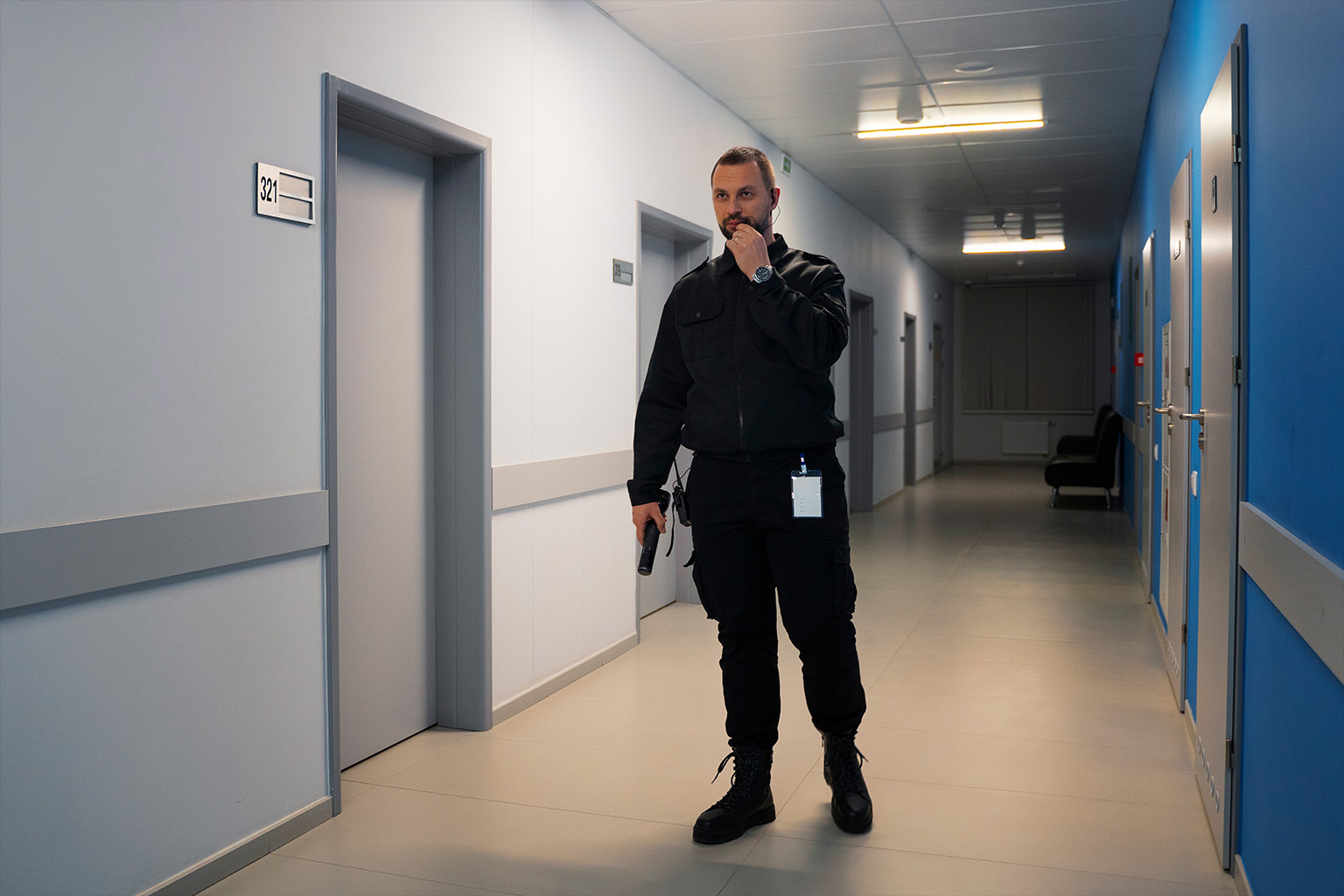
Effective university security is not about making a campus feel restricted or intimidating. It is about creating an environment where students, staff and visitors feel safe, supported and able to go about their day with confidence.
That means security officers need more than the ability to respond to incidents. They also need strong communication skills, sound judgement and the confidence to deal appropriately with a wide range of situations.
On a university campus, an officer may be required to challenge an unauthorised visitor, assist a distressed student, deal with anti-social behaviour, support a lone member of staff, respond to an alarm or simply provide directions to someone unfamiliar with the site.
The approach has to change with the situation.
At Leisure Guard Security, we believe campus security officers should provide reassurance without becoming intrusive. They should be professional, visible and approachable, while still being prepared to act decisively when a genuine security issue arises.
A strong university security team can contribute to much more than crime prevention. Depending on the requirements of the site, officers can also help with:
The result is a security presence that becomes part of the wider campus environment rather than something that feels separate from it.
For universities, that balance matters. The objective is not simply to protect buildings and assets, but to help create a campus where people feel both safe and welcome.
Read our article: Why University Security Matters
University campuses are busy, open environments with large numbers of people, valuable assets and activity taking place across extended hours. The security risks can vary considerably between academic buildings, student accommodation, public spaces and quieter parts of the estate.
A well-planned university security strategy should therefore consider both day-to-day incidents and less frequent situations that may require a rapid, coordinated response.
Open campuses can make it difficult to distinguish between students, staff, legitimate visitors and people who have no reason to be on site. Security officers can support access procedures, challenge suspicious activity and help protect restricted areas.
Universities contain large numbers of laptops, mobile devices, bicycles, equipment and other valuable assets. Visible security, patrols, CCTV and good incident reporting can all contribute to reducing opportunities for theft.
Large student populations, nightlife and public access can sometimes lead to disruptive behaviour. Security teams can intervene appropriately, support university procedures and help prevent situations from escalating.
Campus security officers may be among the first people called when a student is distressed, vulnerable or requires urgent assistance. Clear escalation procedures and effective communication with university teams are essential.
Disagreements, alcohol-related incidents and other confrontations can occasionally escalate. Trained security officers can provide early intervention, de-escalation and appropriate support where required.
Halls of residence can experience unauthorised visitors, noise complaints, anti-social behaviour, welfare concerns and disputes, particularly during evenings and weekends.
Large campus estates often include car parks, pedestrian routes, cycle storage areas and quieter external spaces. Regular patrols can provide deterrence, identify problems and offer reassurance to students and staff.
Researchers, cleaners, maintenance teams, library users and other staff or students may remain on campus when buildings are relatively quiet. Security provision can help provide reassurance and a clear point of contact during these periods.
Buildings, signage, vehicles and external facilities can all be vulnerable to deliberate damage. Visible patrols and rapid reporting can help identify incidents and reduce repeat problems.
Universities may host political events, public speakers, demonstrations and other occasions that attract significant attention. Careful security planning can help protect attendees while supporting the safe operation of the campus.
Fire alarms, medical emergencies, suspicious activity and other serious incidents require clear procedures and effective communication. Security teams can play an important role in initial response, escalation and liaison with university management or emergency services.
Not every university faces the same risks, and those risks can change throughout the academic year.
That is why Leisure Guard Security works with clients to understand the layout, activity, operating hours and specific challenges of each campus before determining the most appropriate combination of security officers, patrols, access control, monitoring and response services.
The security needs of a university rarely remain the same throughout the year.
Student numbers, building occupancy, events, public access and out-of-hours activity can all change significantly between Freshers’ Week, normal teaching periods, exams, graduations and university holidays.
That means effective campus security services need to be flexible.
At Leisure Guard Security, we can adjust officer numbers, patrol activity and specialist support around the changing demands of the academic calendar.
The beginning of the academic year can be one of the busiest periods on campus. Thousands of new students may arrive within a short space of time, often accompanied by family members, vehicles, deliveries and increased activity around student accommodation.
Additional security support can help with access, traffic flow, halls of residence, events, late-night activity and general reassurance during this particularly busy period.
During the main academic year, security provision may focus on day-to-day campus activity, including access control, patrols, student welfare, incident response, libraries, accommodation and external areas.
Security plans can be structured around known patterns of movement and higher-risk periods across the campus.
During exam periods, libraries and study spaces may operate later than usual, with students remaining on campus into the evening or overnight.
Visible security patrols and out-of-hours support can help provide reassurance while ensuring incidents can be responded to quickly.
University open days can bring large numbers of prospective students, parents and visitors onto campus.
Security teams can support visitor management, access, car parks, crowd movement and public-facing areas while helping the university maintain a welcoming first impression.
Graduation ceremonies, conferences, sporting fixtures and high-profile events can all create temporary increases in footfall and security demand.
Leisure Guard can provide additional university event security to support access management, crowd control, incident response and coordination with existing campus teams.
When student numbers fall, the risk profile of the campus changes.
Buildings may be quieter, certain areas may be temporarily closed and natural surveillance can reduce considerably. Security patrols, keyholding, alarm response and guarding can help protect property, equipment and university assets during these quieter periods.
Universities do not always need the same number of officers every day of the year.
Leisure Guard Security can provide a flexible security model that allows additional resources to be deployed during busier or higher-risk periods, while maintaining appropriate coverage during normal operations.
This can help universities improve resilience without relying on a fixed security structure that may not reflect changing demand.
Many universities already operate their own in-house security department, and in those cases the requirement may not be to replace an existing team.
Instead, the priority may be to add extra resilience, fill staffing gaps, increase coverage during busy periods or bring in additional support for specific buildings, events or out-of-hours operations.
Leisure Guard Security can work alongside existing campus security teams to provide additional resources where they are needed most.
Our support can include:
Where we are supporting an existing university security team, our officers can work within agreed site procedures, assignment instructions and escalation routes.
This helps create a more consistent service and avoids the disruption that can occur when temporary or additional security personnel operate without a clear understanding of the campus.
We can work with university security managers, estates teams and facilities departments to ensure officers understand:
For many universities, the biggest advantage of additional outsourced support is flexibility.
Rather than permanently increasing an in-house team, universities can bring in additional resources when operational demand increases, helping maintain service levels while keeping overall control of the campus security strategy.
Whether you require one additional officer, temporary event cover or a larger team supporting multiple sites, Leisure Guard Security can provide a solution designed to integrate with your existing operation.
The Terrorism (Protection of Premises) Act 2025, commonly known as Martyn’s Law, introduces new requirements aimed at improving preparedness and protecting the public at qualifying premises and events.
Universities and other higher-education establishments are specifically included within the scope of the legislation where the relevant criteria are met.
Unlike many other education settings, university campuses can include buildings and spaces that are regularly accessible to students, staff, visitors and members of the public. Large campuses may also host conferences, graduations, performances, sporting fixtures and other events that bring significant numbers of people together.
For university security teams, this makes effective planning, communication and incident response increasingly important.
Professional security provision can form part of a university’s wider approach to safety and preparedness.
Depending on the campus and its requirements, Leisure Guard Security can support areas including:
Security officers should also understand their role within the university’s wider emergency procedures so that, if a serious incident occurs, there is a clear and coordinated response.
Martyn’s Law does not simply mean employing more security officers, and security personnel alone do not determine compliance.
Universities should consider their responsibilities under the legislation as part of a broader approach involving procedures, training, communication, risk assessment and appropriate protective measures.
Leisure Guard Security can work alongside university estates, facilities and security teams to provide professional security services that support those wider arrangements and help strengthen campus resilience.
Effective university security services depend on more than placing officers on site.
For a campus security contract to work properly, officers need clear instructions, reliable management, strong communication and the support of an operational structure behind them.
At Leisure Guard Security, we focus on the management of the service as much as the visible security presence itself.
Before a contract begins, we can work with university stakeholders to understand the site, operating hours, risk profile, access procedures, patrol requirements and escalation routes.
This helps ensure that officers arrive on site with a clear understanding of what is expected from them.
Mobilisation can include:
University security contracts can involve multiple buildings, different shifts and changing requirements throughout the academic year.
Our operational management structure provides ongoing support to help maintain consistent standards across the service.
This includes communication with site teams, officer supervision and escalation where additional support is required.
Accurate reporting is an important part of any professional campus security service.
Digital incident reporting can provide university teams with clear records of incidents, patrol activity and actions taken by security officers.
This helps support accountability, trend analysis and ongoing security reviews.
Security incidents do not always happen during office hours.
Leisure Guard Security provides operational support so that officers have a clear escalation route when incidents occur overnight, at weekends or during quieter periods.
This can be particularly important across student accommodation, libraries, laboratories and multi-site university estates.
A university security contract should not remain static.
Regular reviews can help identify recurring incidents, changing risks and opportunities to improve the service.
Where appropriate, performance can be monitored through agreed KPIs, reporting, incident trends and operational feedback.
The aim is to create a security service that continues to evolve alongside the university rather than simply delivering the same routine year after year.
By combining trained officers with supervision, reporting and operational support, Leisure Guard Security can provide universities with a managed security service that is designed to be reliable, accountable and responsive.
This gives university stakeholders greater visibility of the service and greater confidence in how their campus security provision is being delivered.
Choosing a university security provider is about more than filling shifts. Universities need a partner that can provide reliable officers, consistent standards, responsive management and the flexibility to adapt as campus requirements change.
Leisure Guard Security combines frontline security with the operational support needed to manage complex university environments effectively.
Leisure Guard Security operates as an SIA Approved Contractor, demonstrating our commitment to professional standards, management processes and service delivery.
We provide security services across the UK, giving universities and multi-site education groups access to a provider capable of supporting individual campuses, regional estates and wider national requirements.
University security demand can change quickly. We can increase officer numbers for Freshers’ Week, events, graduations, periods of increased risk or temporary staffing requirements, helping universities maintain appropriate coverage when it matters most.
Our officers are supported by an operational structure that provides escalation and assistance outside normal office hours.
This helps ensure that security personnel are not left isolated when dealing with serious incidents overnight, at weekends or during quieter campus periods.
Clear and accurate reporting gives university teams greater visibility of what is happening across their estate.
Our digital reporting systems can help record incidents, actions taken, patrol activity and other relevant security information, supporting accountability and ongoing review.
Security contracts require consistent management behind the scenes.
Our operational teams support mobilisation, officer supervision, site requirements and ongoing communication to help maintain standards throughout the contract.
We can provide anything from a single additional officer through to larger, multi-site security teams.
This allows Leisure Guard to support fully outsourced contracts, existing in-house security departments, temporary requirements and specialist deployments.
Where required, universities can combine manned guarding with additional services such as mobile patrols, keyholding, alarm response, CCTV support and event security.
This can help reduce the complexity of managing multiple security suppliers across the same estate.
Every university is different.
Our approach is to understand how your campus operates, where your risks are and what your internal teams need from a security partner.
From there, we can build a security service around your university rather than expecting your university to fit around a standard security package.
University security officers can support access control, patrols, incident response, student and staff welfare, visitor management, building security, events and out-of-hours activity. Their role can vary depending on the size, layout and requirements of the campus.
Yes. We can provide additional officers to support an existing in-house team, including sickness cover, holiday cover, overnight security, event support, Freshers’ Week deployments and additional resources during busy or higher-risk periods.
Yes. Leisure Guard Security can provide 24/7 security coverage where required, including overnight guarding, patrols, student accommodation security and out-of-hours response.
Yes. We can provide security for student halls, residential buildings and university accommodation. This can include access control, visitor management, patrols, welfare support, incident response and assistance with anti-social behaviour or out-of-hours issues.
Yes. We can support Freshers’ Week, graduations, open days, conferences, sporting events, student events and other university activities. Security provision can be scaled around expected attendance, venue requirements and the level of risk.
Where a security role requires an SIA licence, Leisure Guard Security provides appropriately licensed personnel in line with UK security industry requirements.
Yes. Universities can use Leisure Guard for short-term or temporary requirements, including staff absence, events, holiday cover, project work, increased risk periods and additional security during busy parts of the academic year.
Yes. We can support universities with multiple campuses, satellite buildings and wider estates. Security arrangements can be designed to provide consistent standards across different locations while taking account of the specific risks at each site.
Yes. Mobile patrols, keyholding and alarm response can be incorporated into a wider campus security strategy or provided as standalone services, depending on the requirements of the university estate.
The Terrorism (Protection of Premises) Act 2025, commonly known as Martyn’s Law, can apply to qualifying higher-education premises where the relevant criteria are met. Universities should consider the legislation as part of their wider approach to preparedness, procedures, communication and protective security measures.
The first step is to discuss your campus, existing security arrangements and the areas where additional support may be required. From there, Leisure Guard Security can develop a tailored proposal based on your estate, operating hours, risk profile and service requirements.
Whether you are reviewing an existing security contract, strengthening an in-house campus security team or looking for additional support across specific buildings, accommodation or events, Leisure Guard Security can help.
We provide flexible university security services designed around the way your campus operates, the risks you face and the level of support your internal teams require.
From individual officers and temporary deployments to wider multi-site security provision, our team can work with you to develop a solution that is practical, scalable and appropriate for your university environment.
Tell us about your campus, your current security arrangements and where you need support. We can then discuss the most appropriate combination of security officers, patrols, access control, event security, keyholding, alarm response and operational support.